I went on a 3 day guided tour of the salt flats and the surrounding area. Our tour guide, Bismarck, was a pretty chill dude and the other visitors on the tour, 3 Irish and 1 Russian folks, were also pretty chill. We got along quite well.
There was a lot of driving happening between stops so we took turns playing music on the bluetooth. I spent a lot of time reading books and got through 2 books on this tour alone.
One night our driver, Bernardo, played us some songs on his cucharra a 12 string ukulele-like instrument that is common to South America.
Train Graveyard
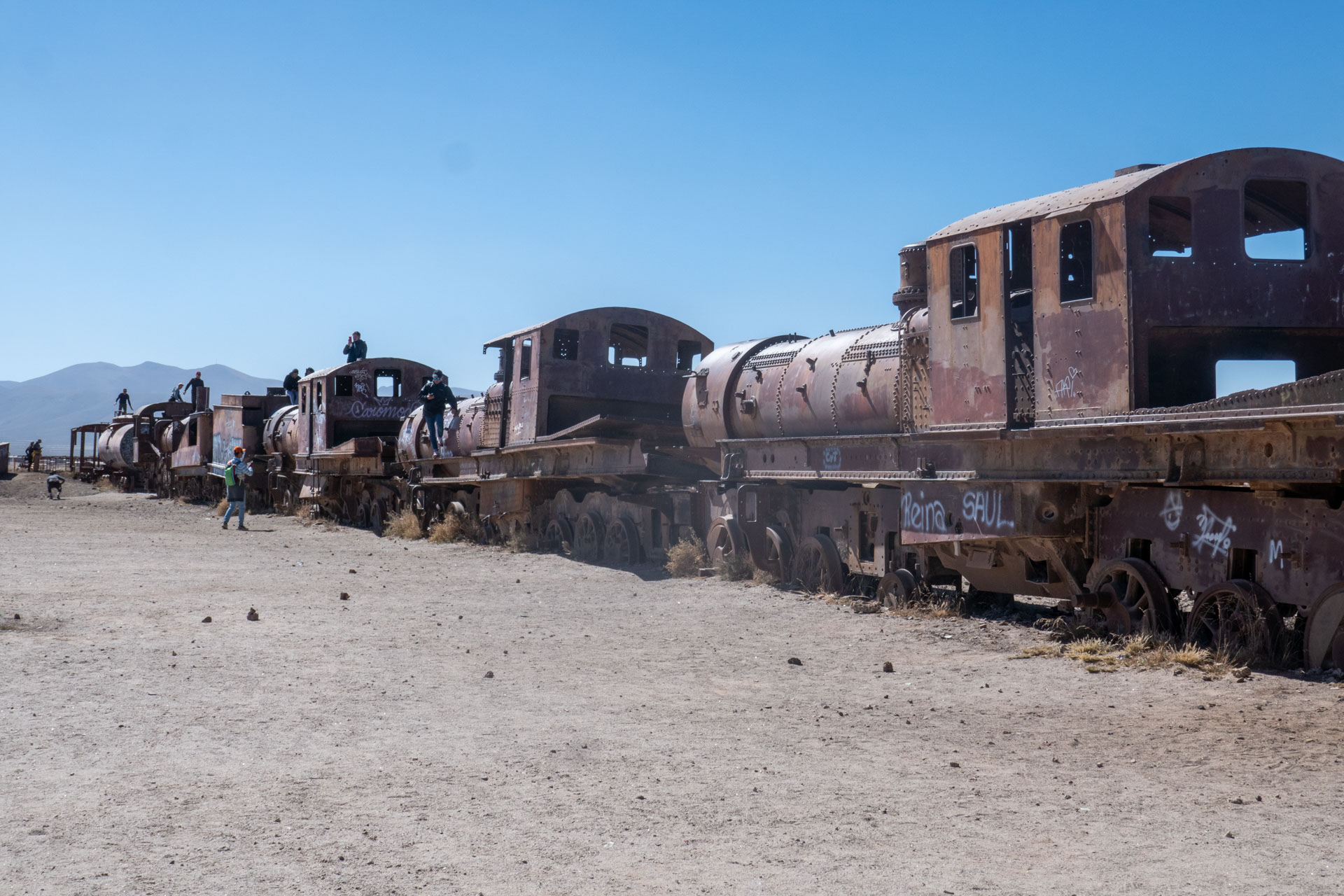
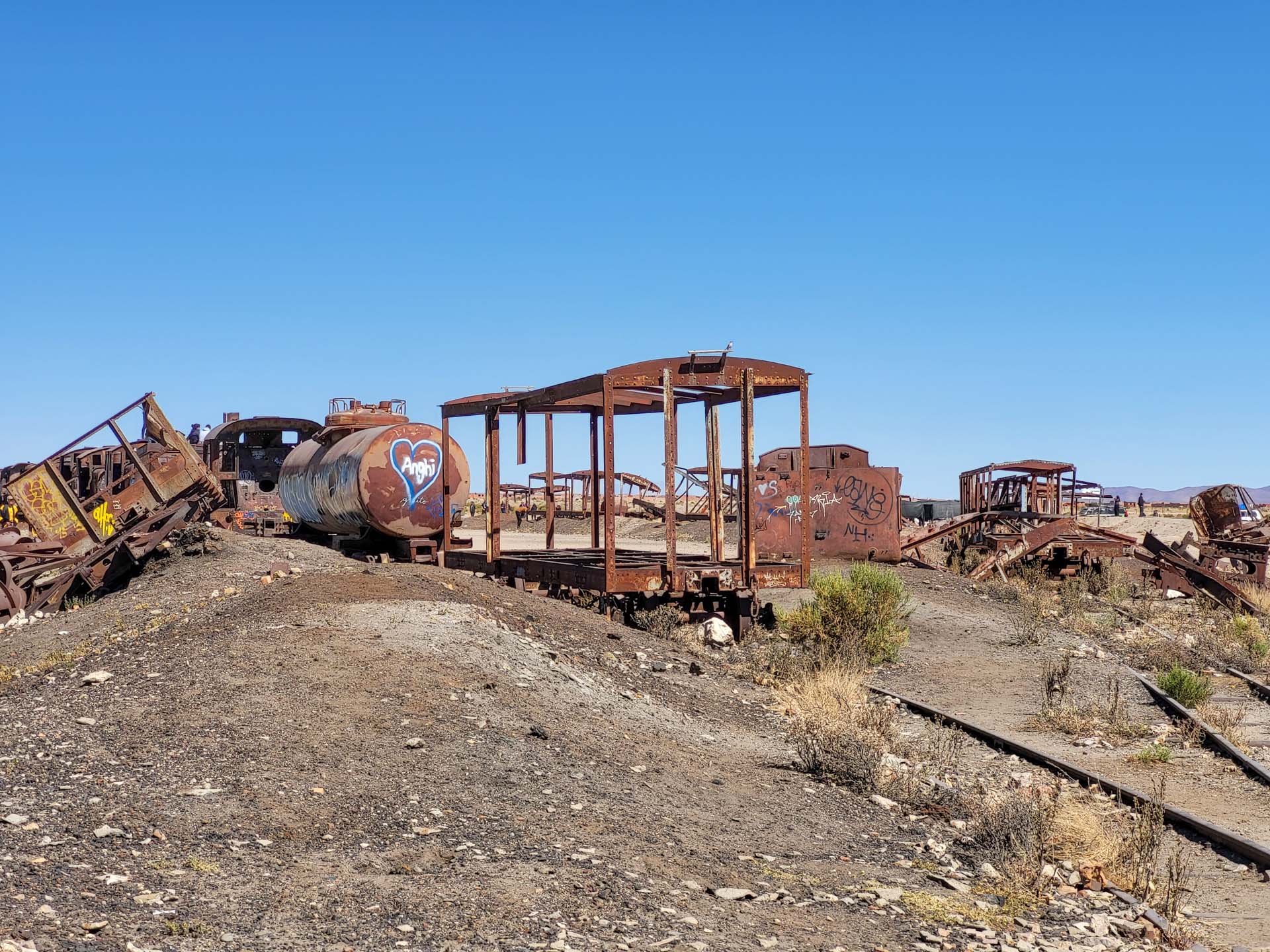
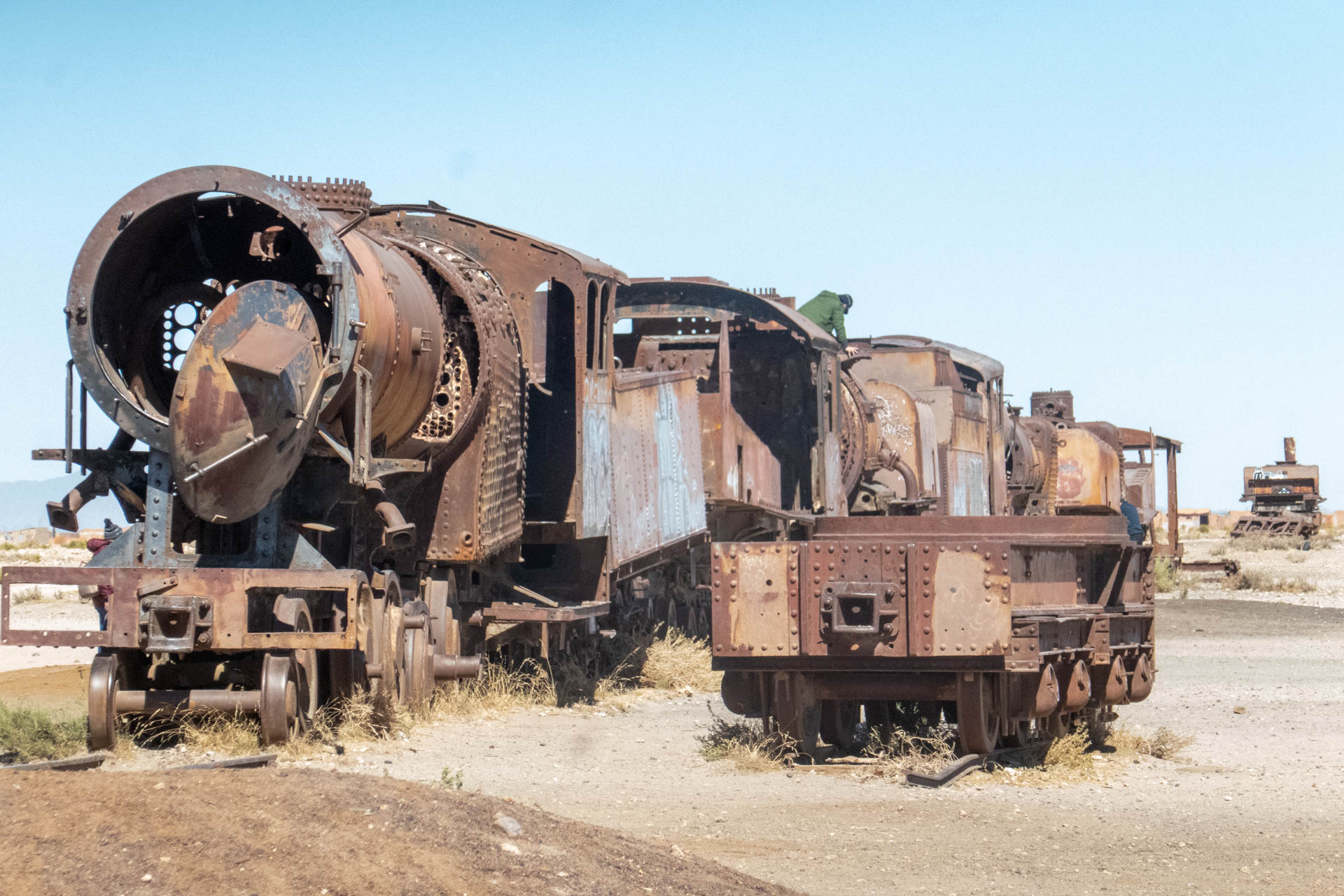
Uyuni used to be only connected by a train line that would carry away the ores and salt that was mined in the area. In the old days it was a steam train and they dumped the decommissioned trains in a certain area that is known today as the train graveyard.
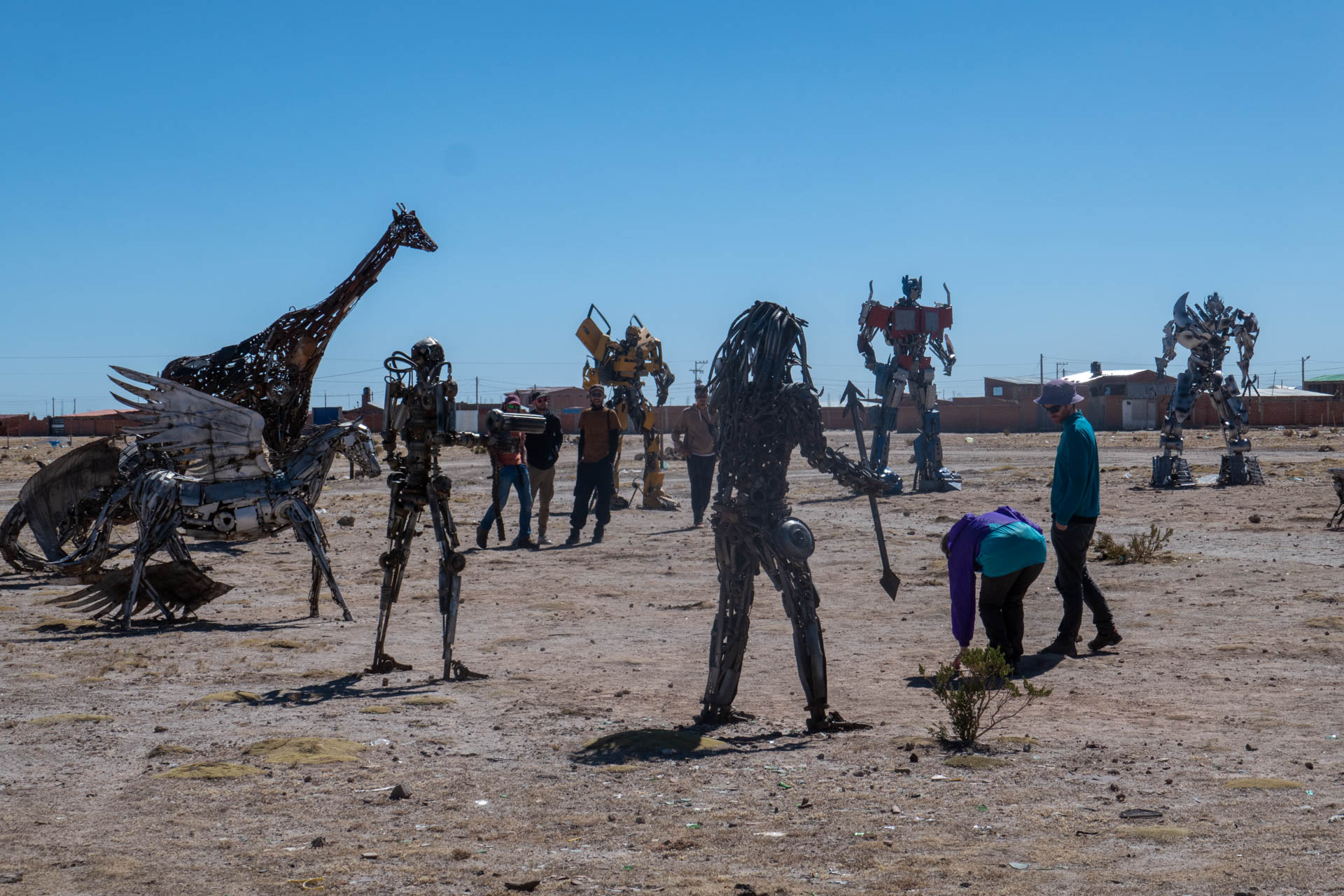
A metal artist had built some pop culture statues from the abundant metal. Among them, the terminator, an alien and the predator, optimus prime and bumblebee.
Salar de Uyuni - The Salt Flats
At the beginning of the tour over the salt flats we visited a small town where they make salt and explained the process to us. You could also buy some souvenirs there.
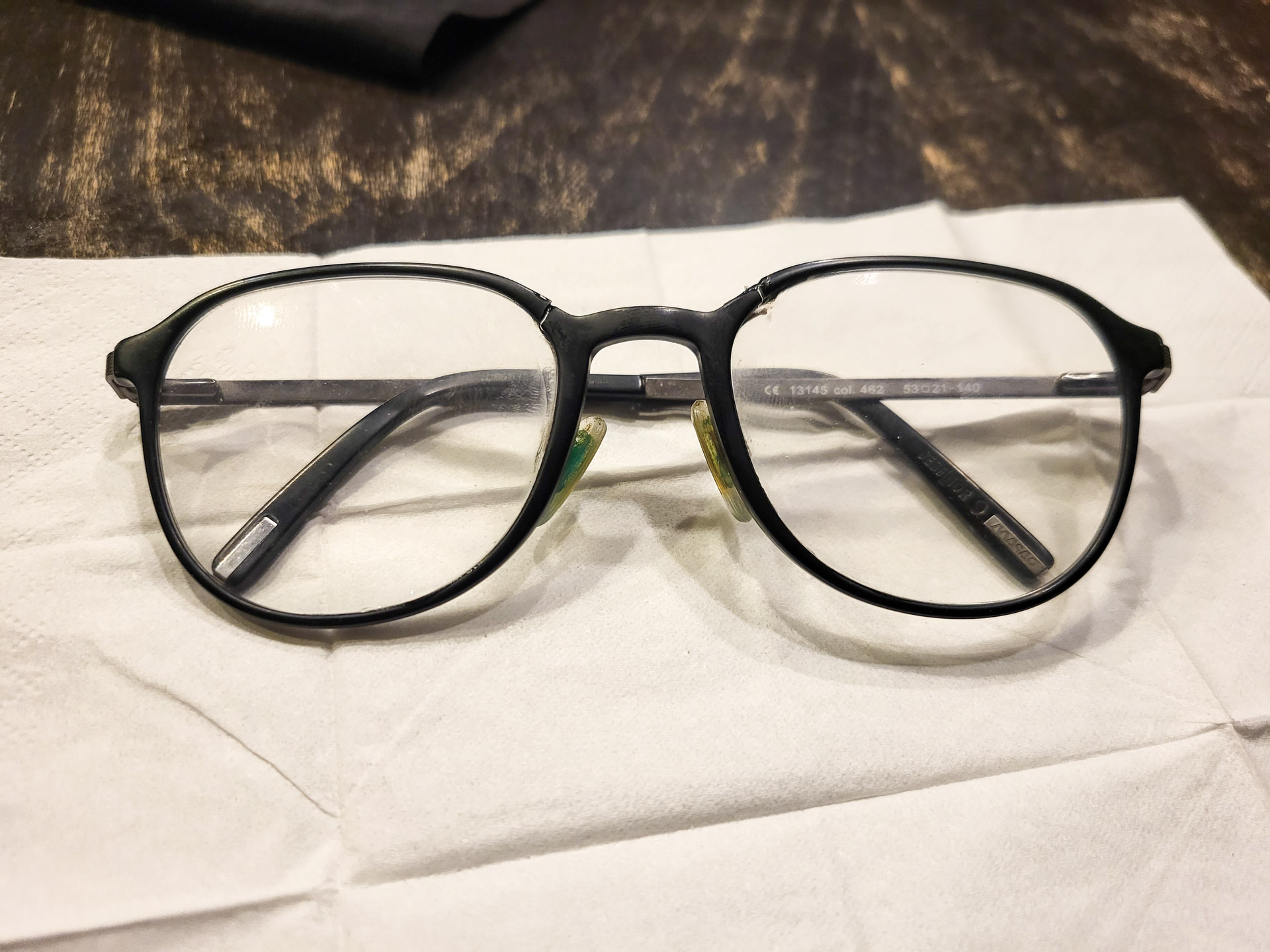
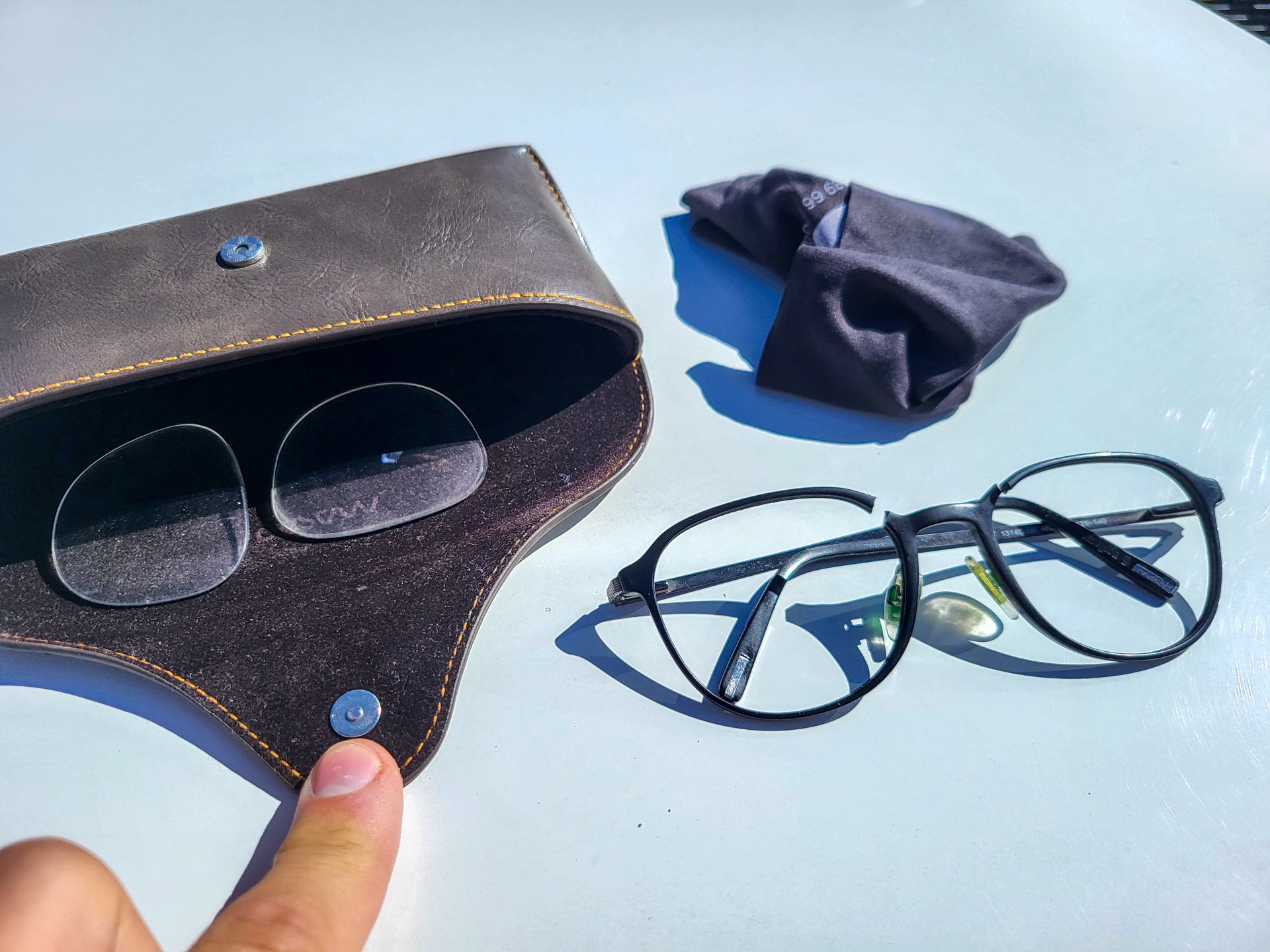
Sadly, on this first day of the tour, my glasses suddenly broke and I didn’t get access to a glue until I was back in Uyuni after 3 days so I had to run around with my prescription sunglasses all day (and night).
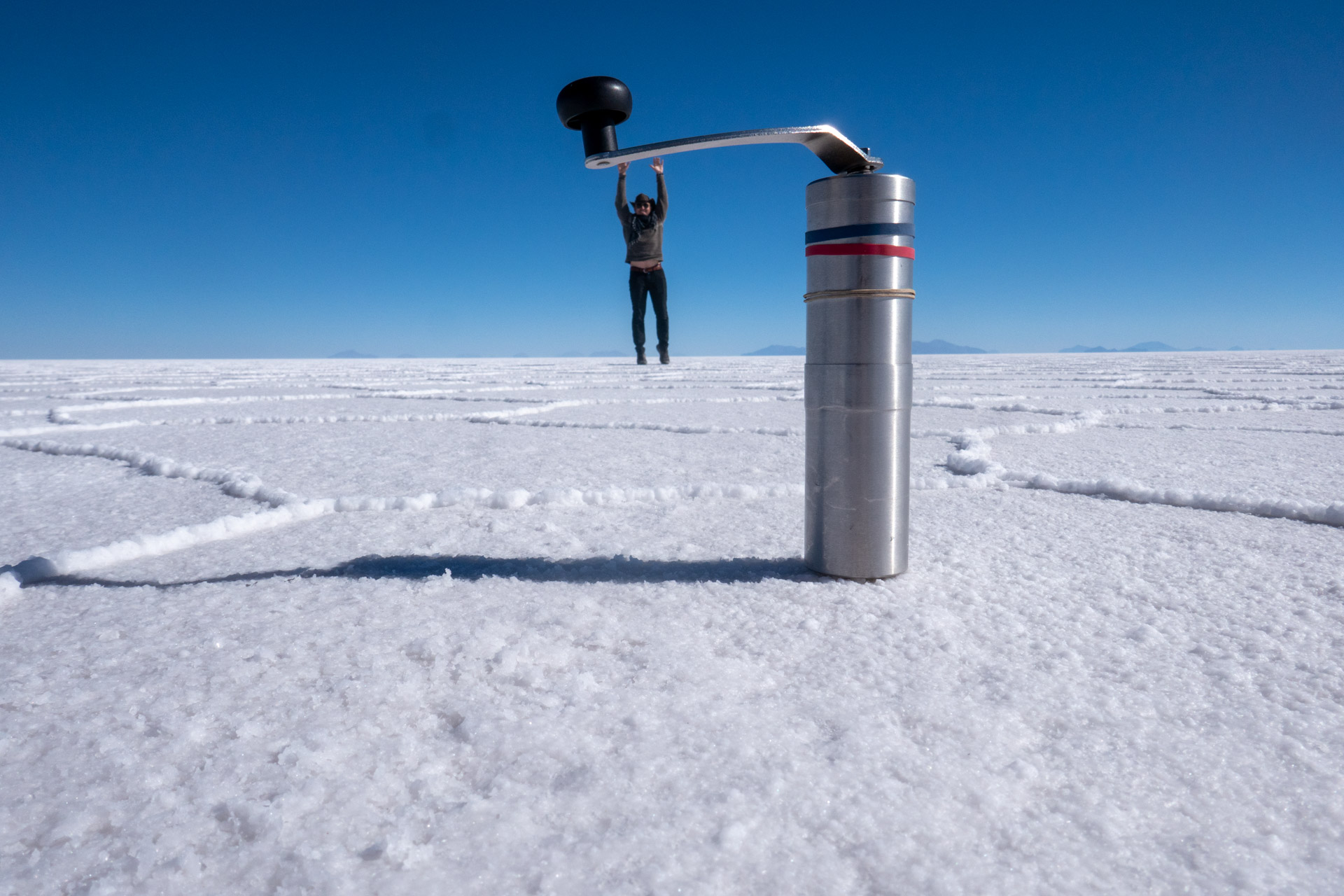
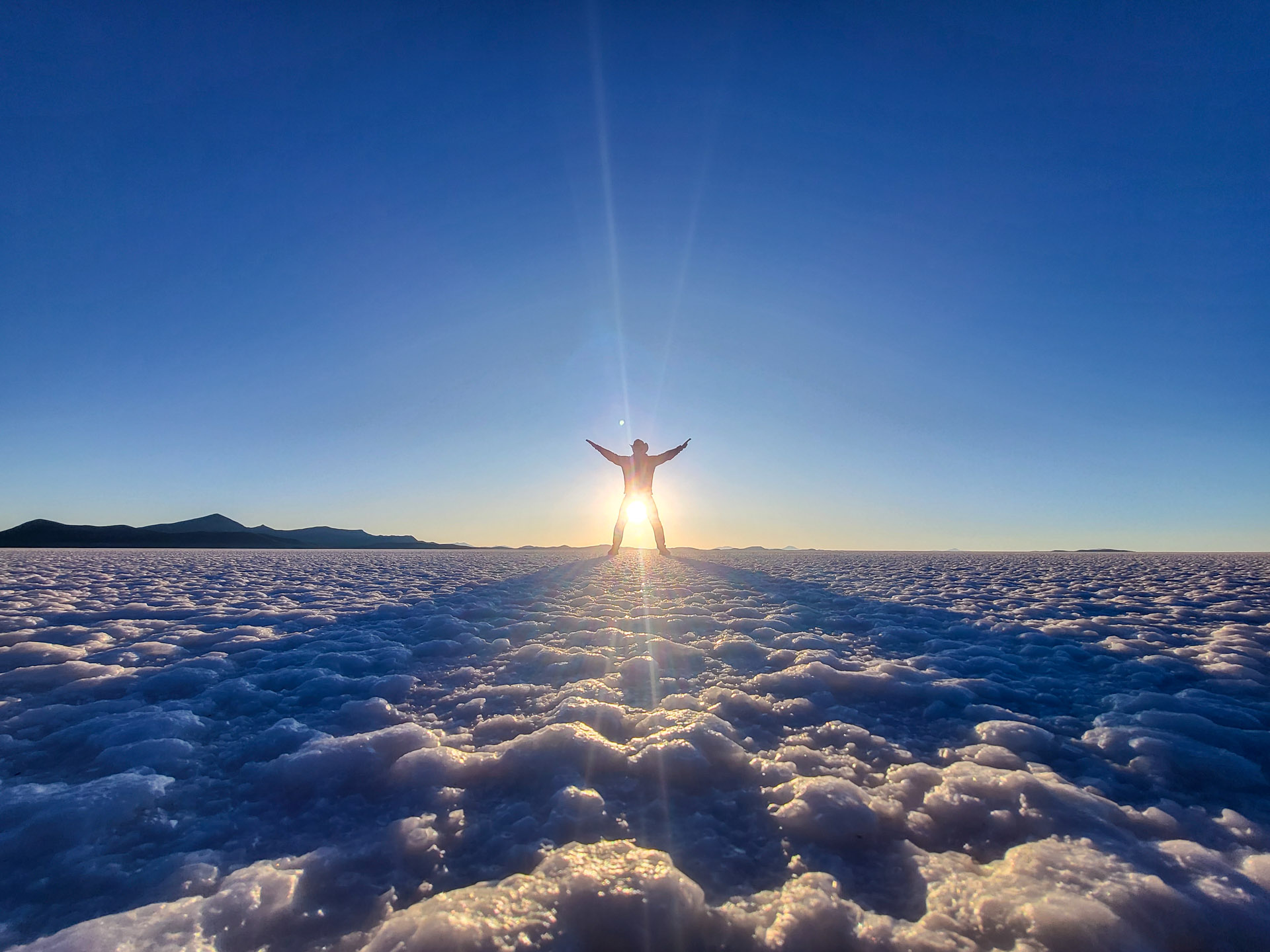
The unique landscape allows for some perspective tricks.
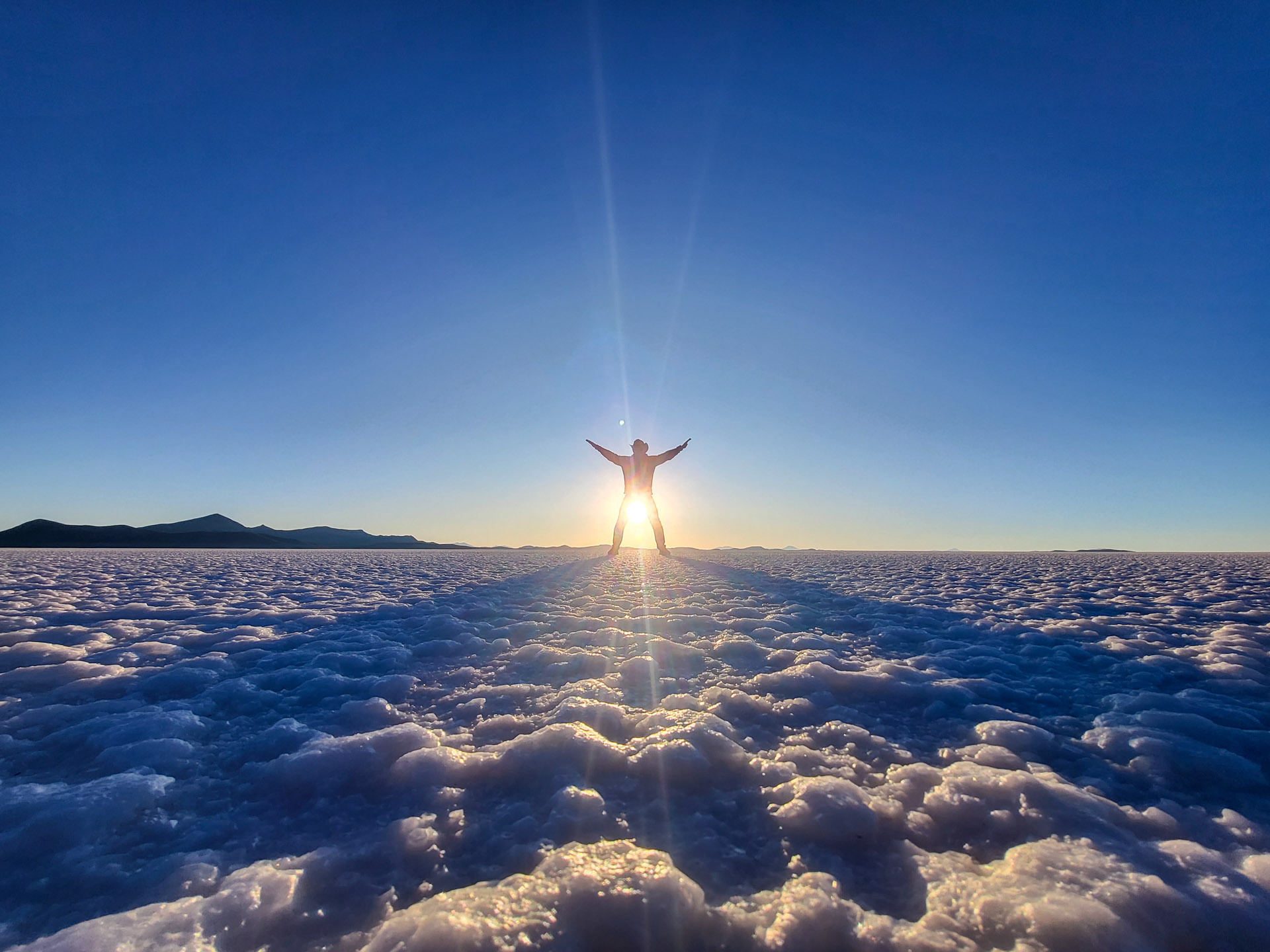
At sunset you get really really long shadows.
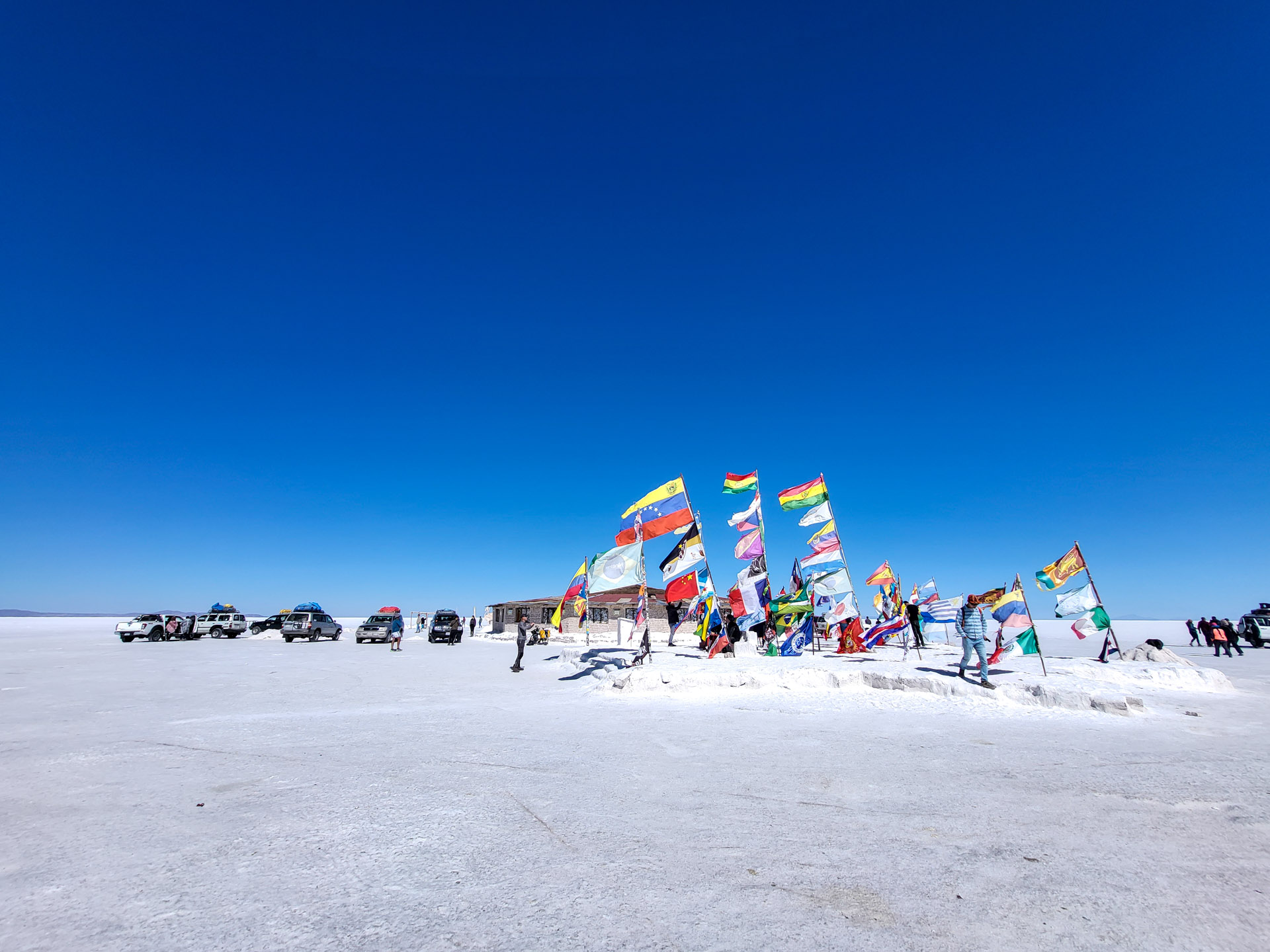
The Nascar Rallye was held here once and the starting point on the flats still is used to show country flags. Tourists can bring their own and add them to the bunch. Sadly I didn’t have a German one to complete the set.
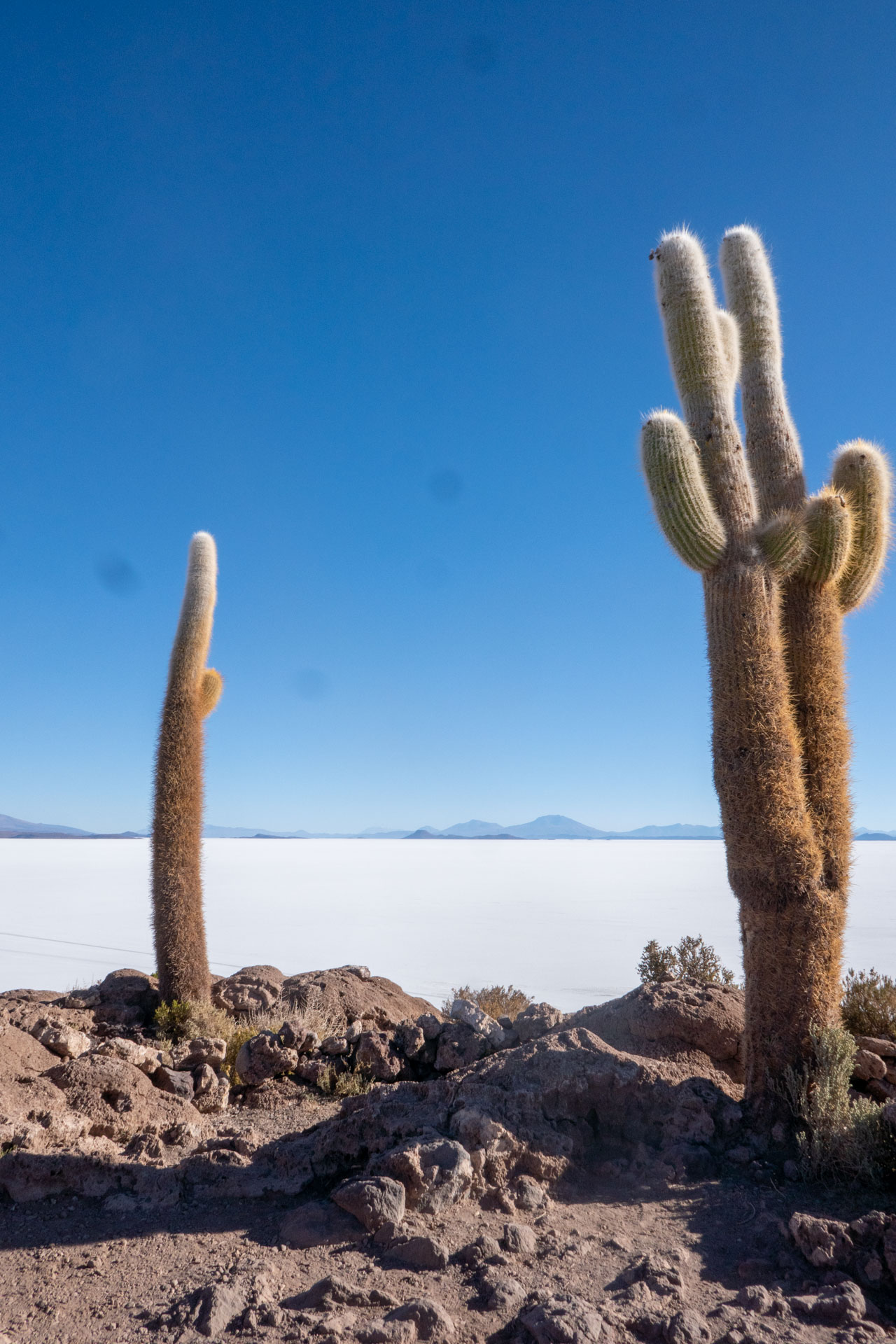
In the middle of the salt flats there is a small island with huge cacti and an altar that is still used for animal sacrifices in honor of pachamama.
We were driving an average of 70kph over the salt flats but it still took us a while to get to the edge and then to our cabins for the night. I wanted to shower in the morning but when I tried to do that in the morning, the pipes had frozen over night and water didn’t run at all. Luckily they had a gas heater in the breakfast room.
Vizcacha Rock
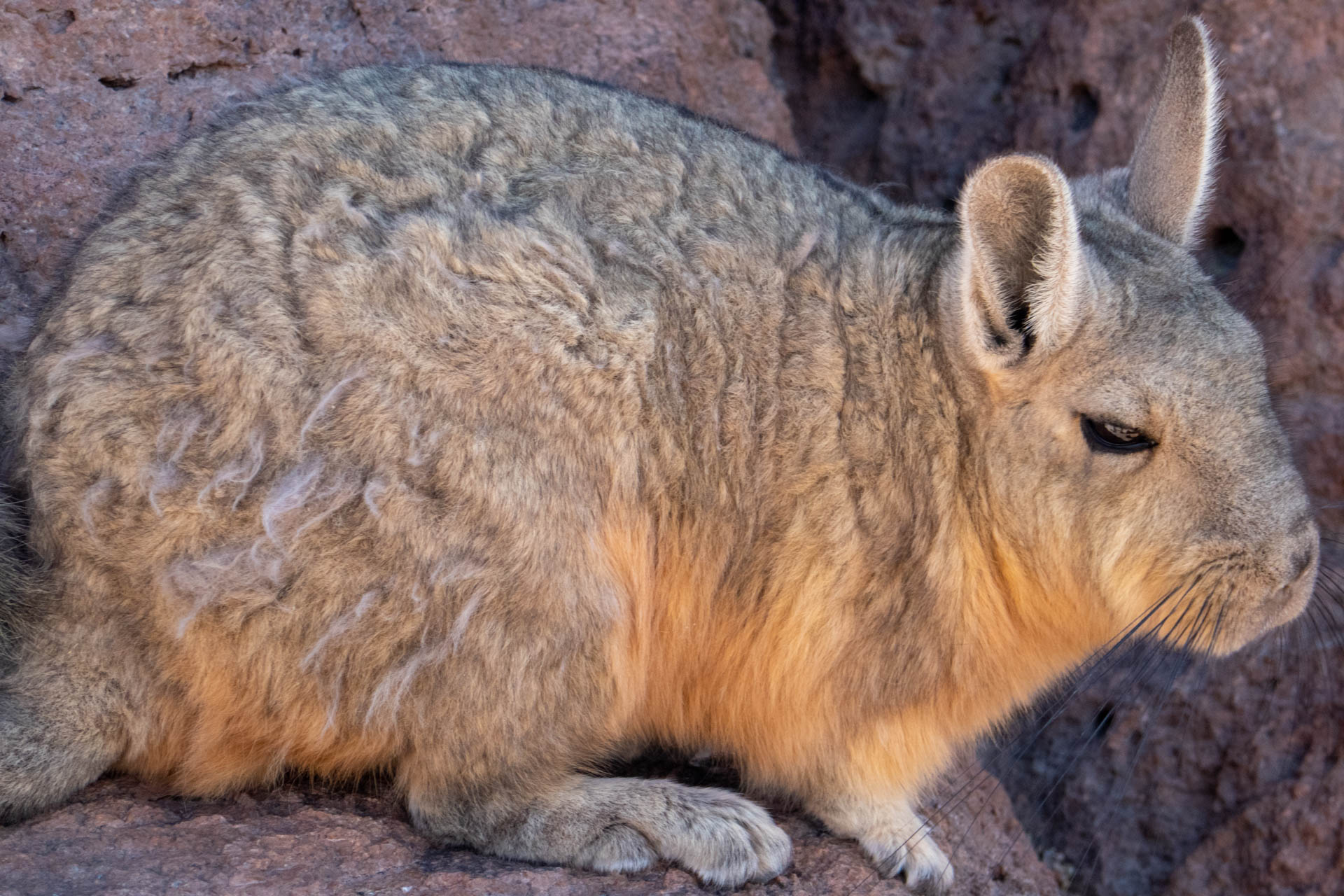
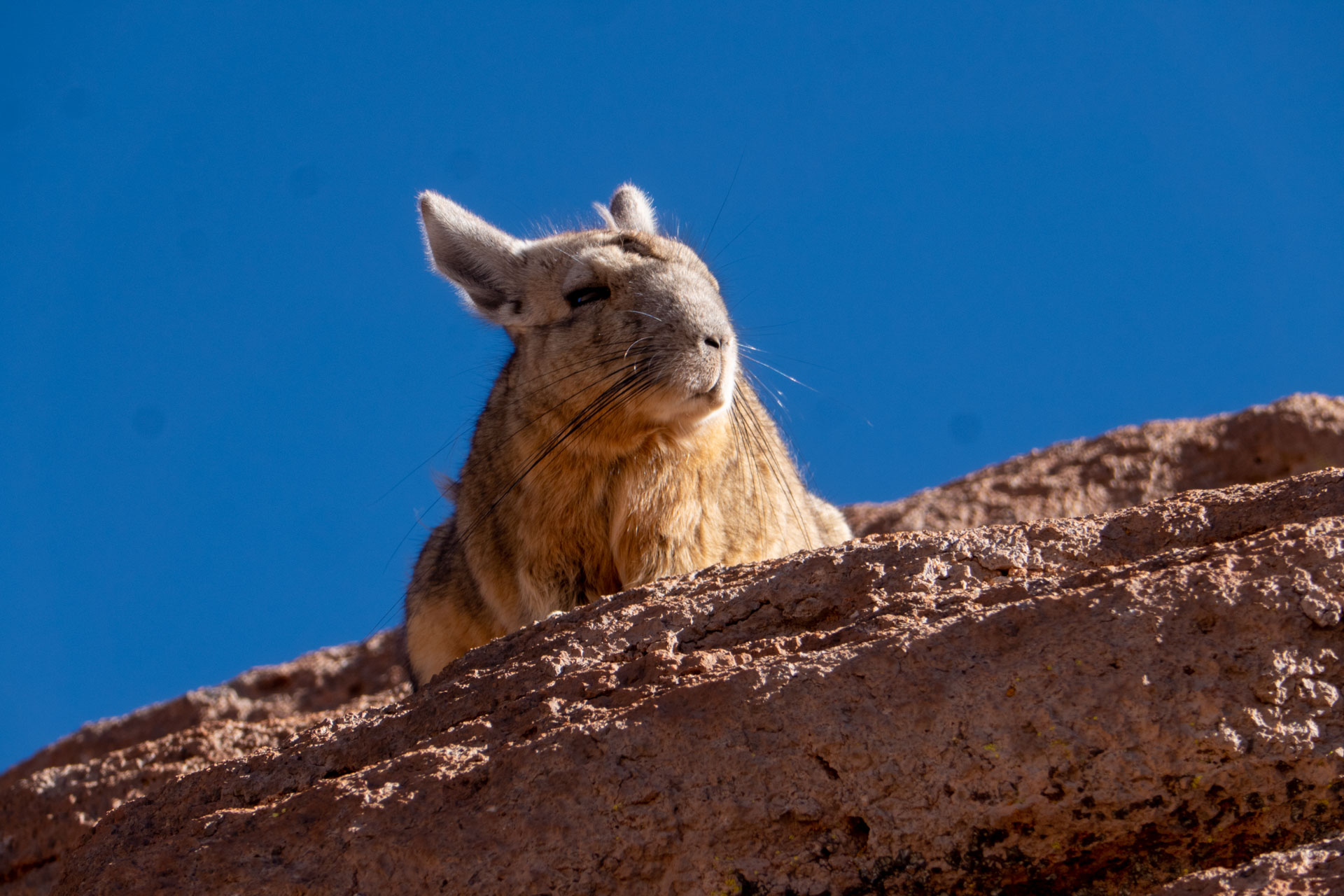
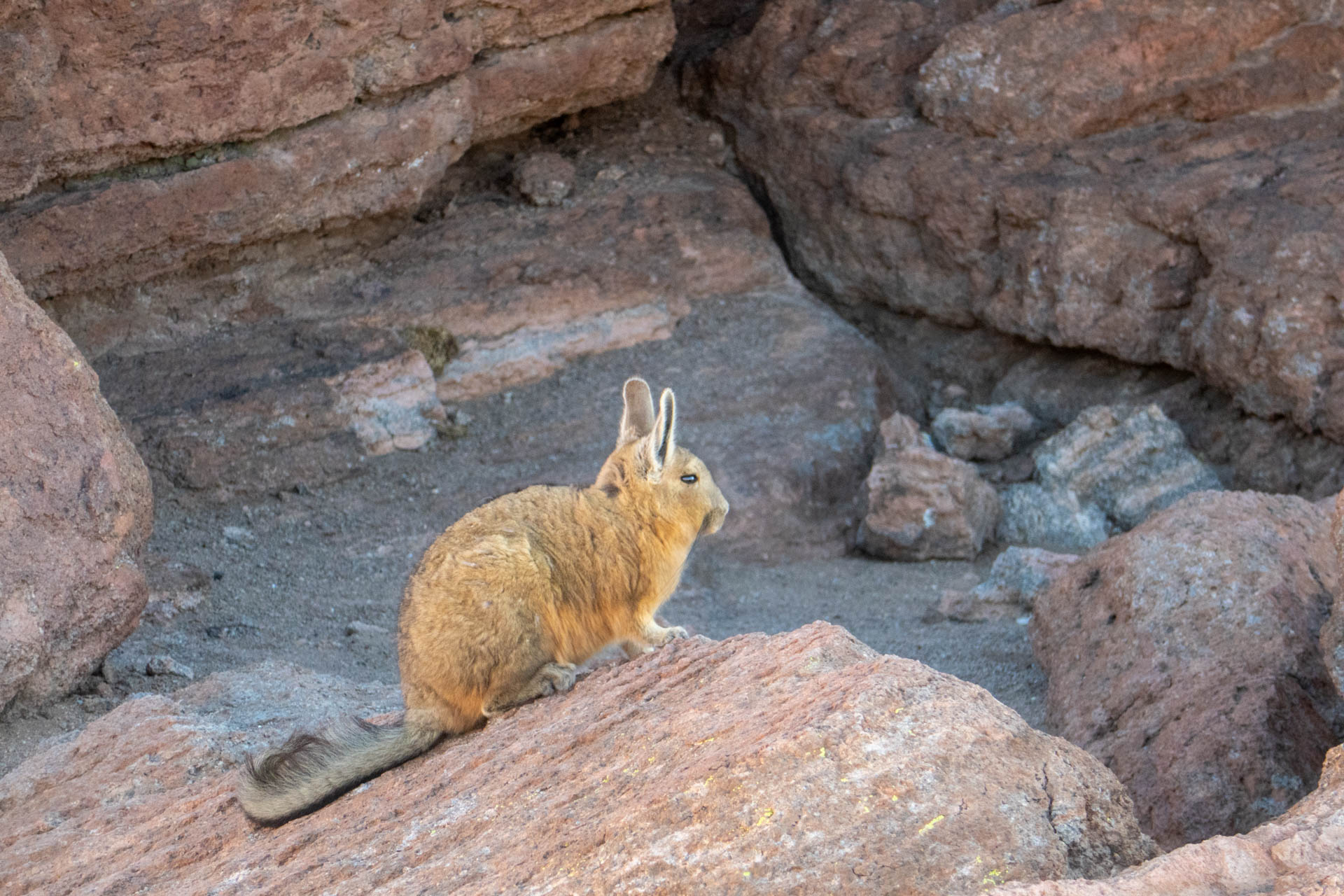
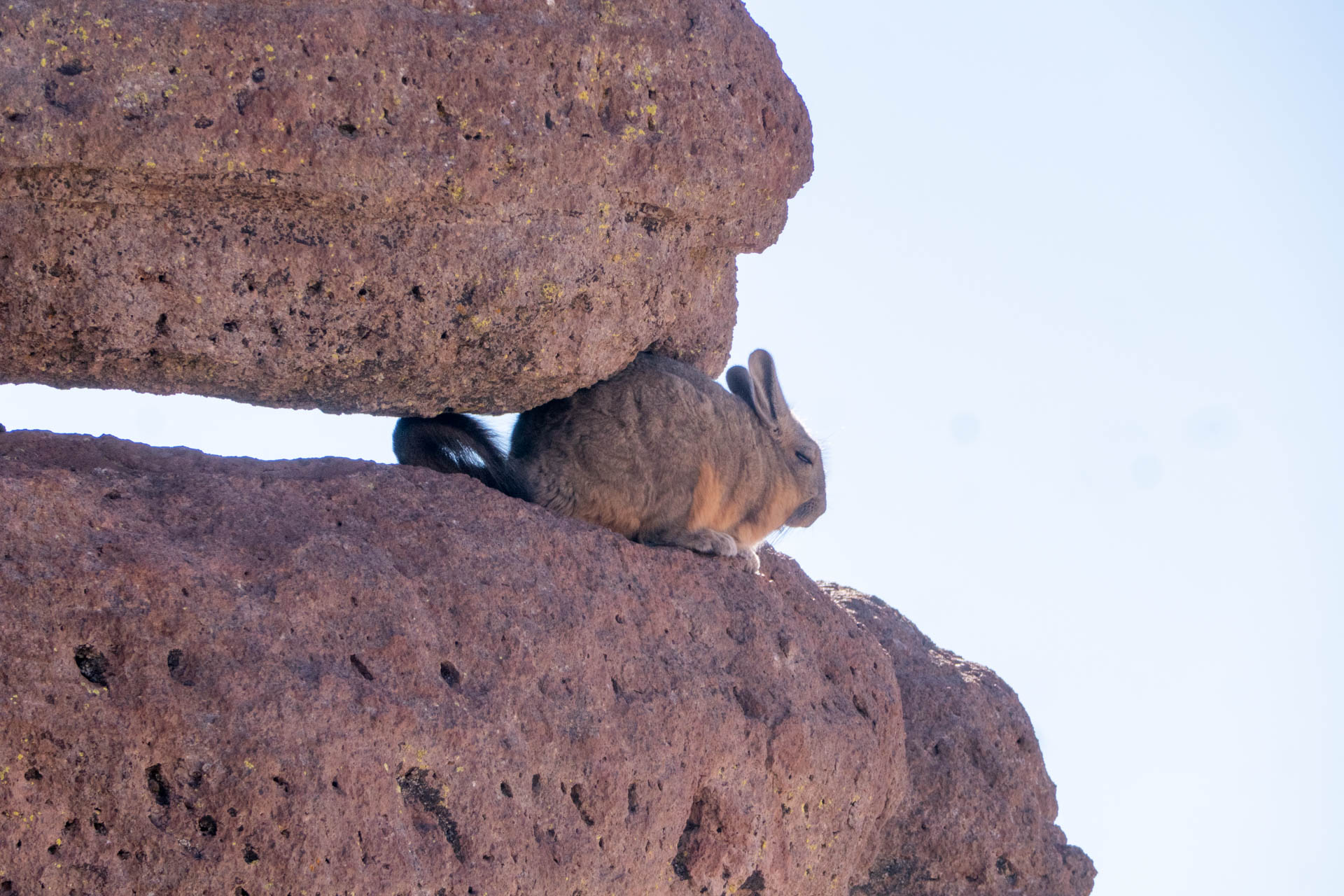
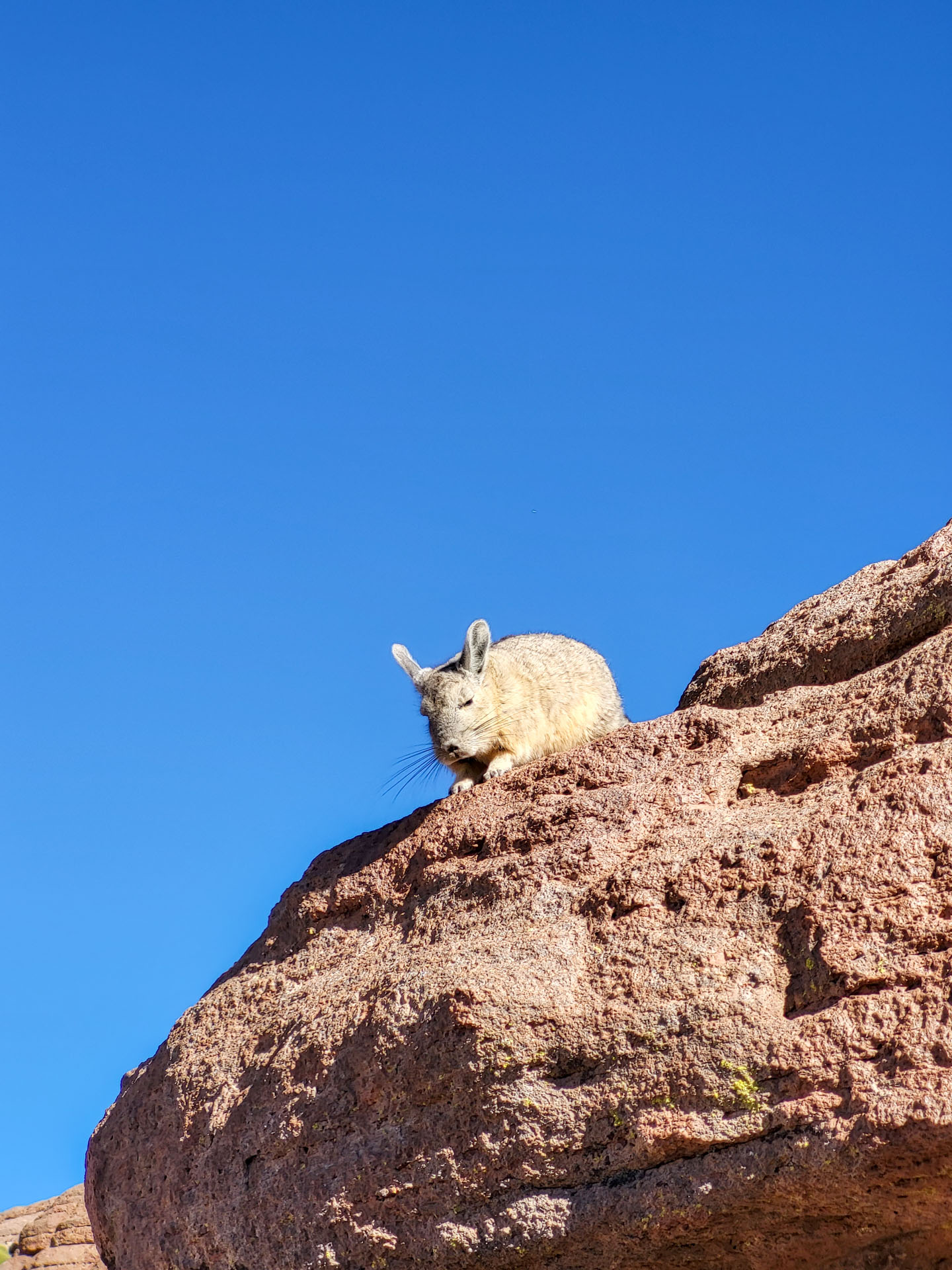
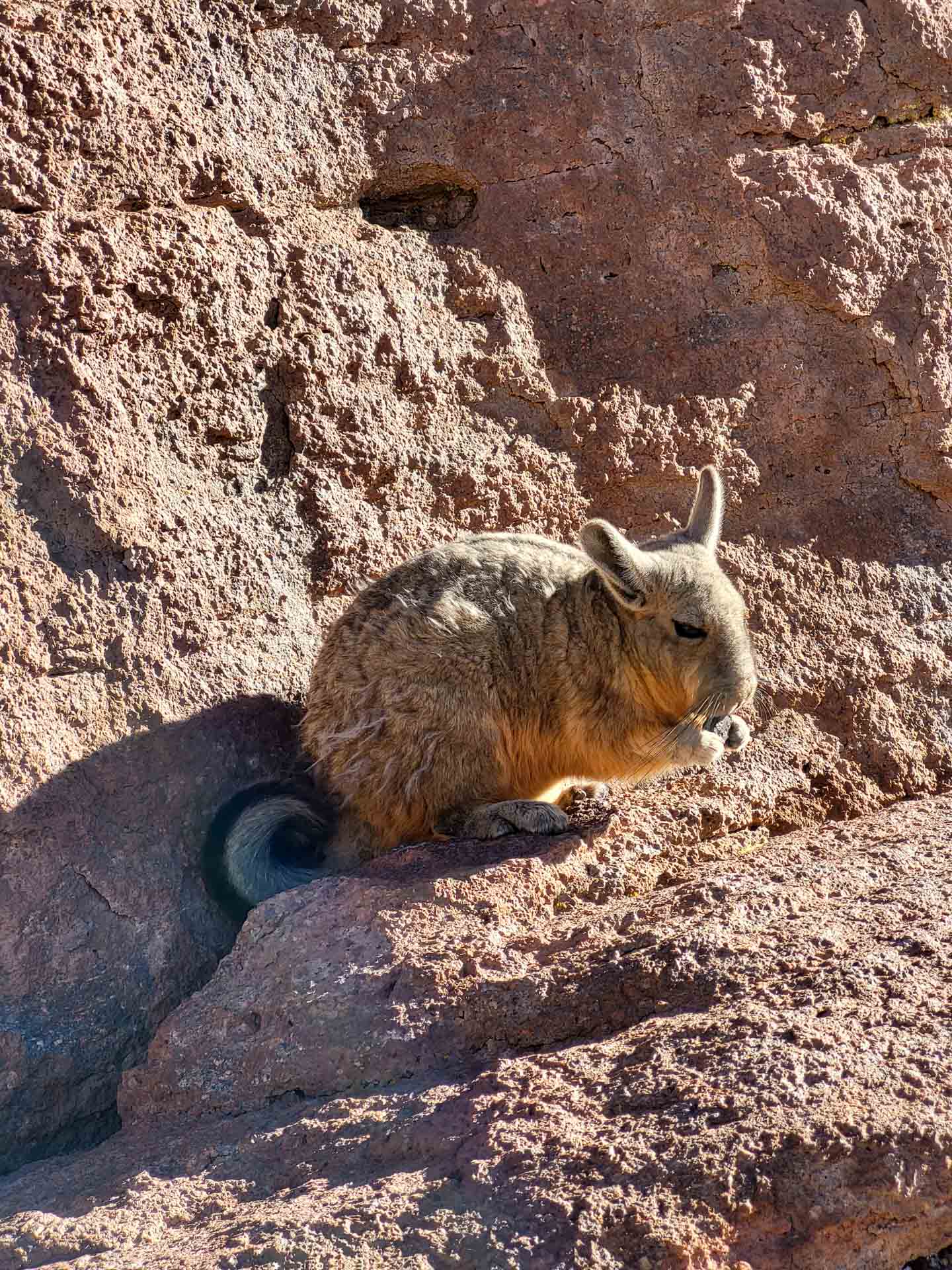
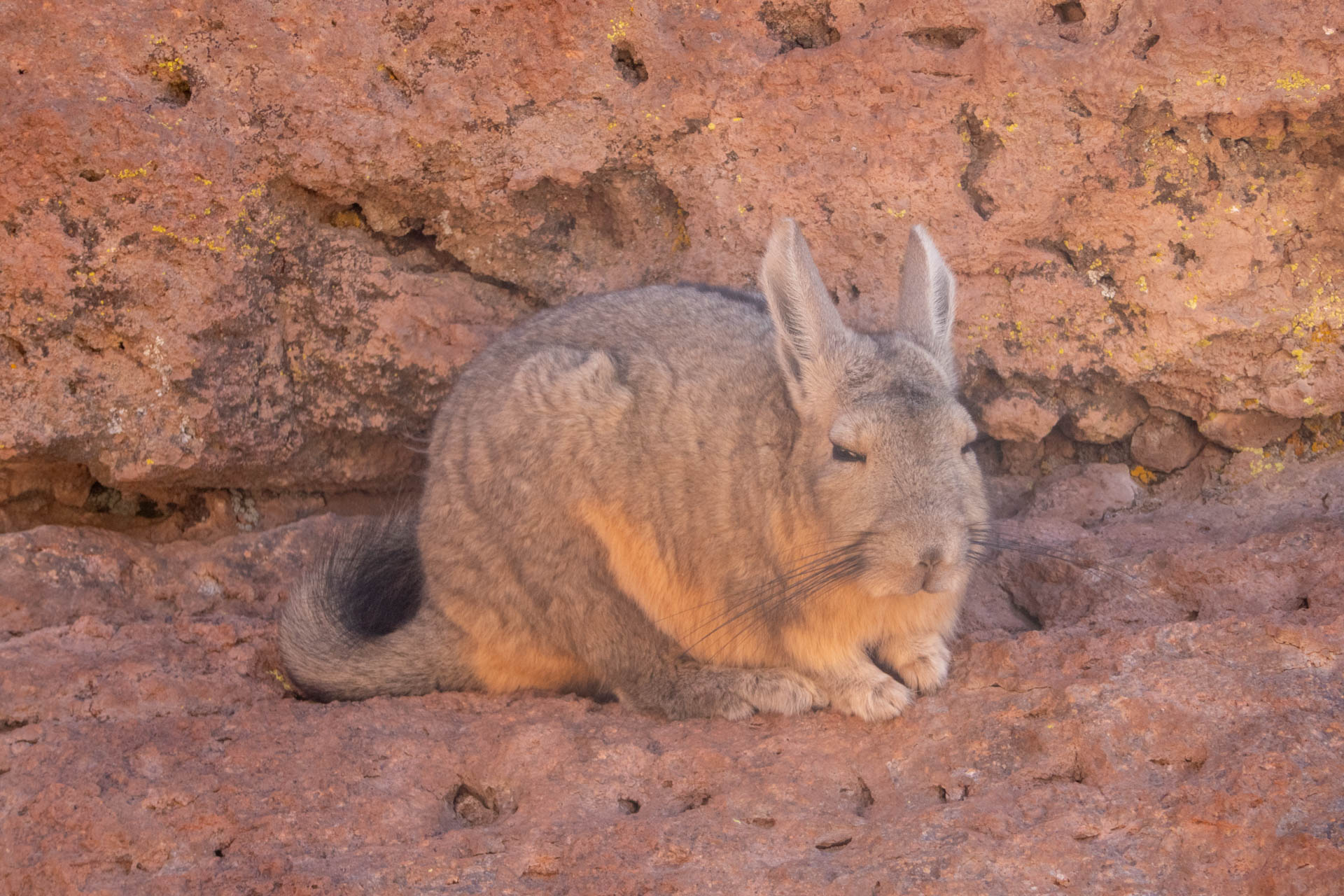
Vizcachas are relatives of the Chinchilla and on this particular rock they are not shy at all which allowed us to get some really nice close up pictures of these depressed looking cuties.
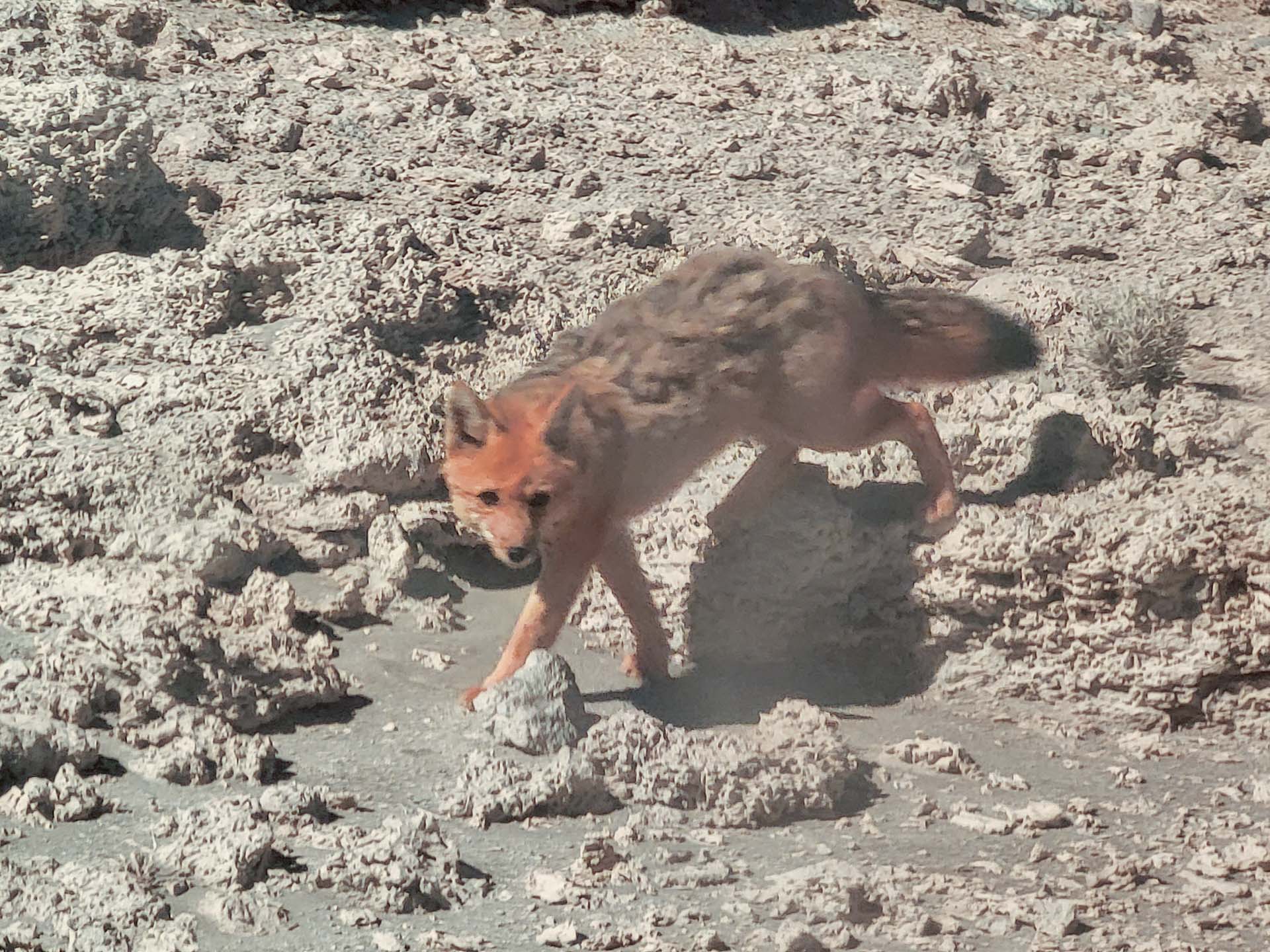
Foxes also roam the altiplano
The Flamingo Lagoons
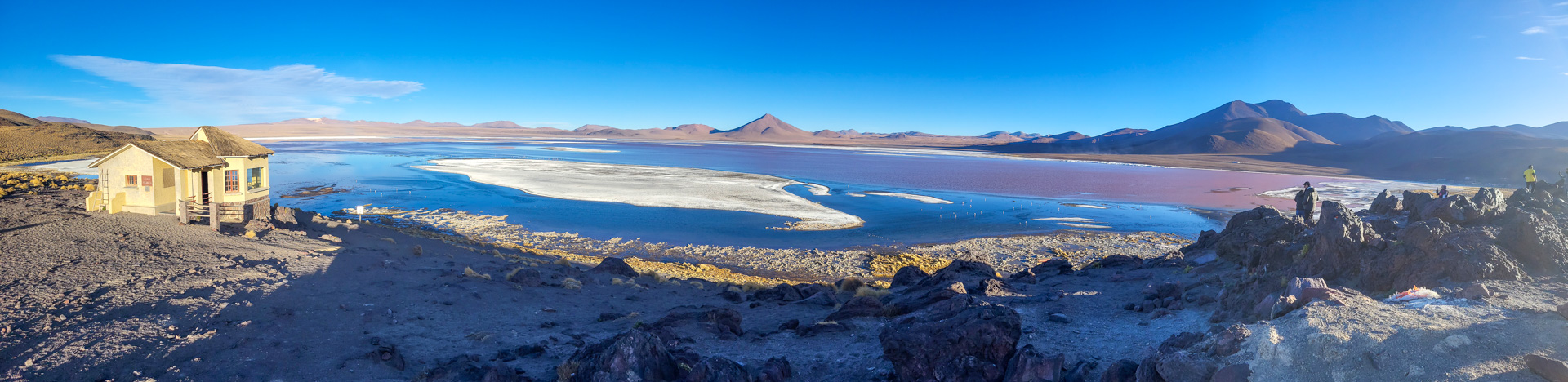
This lagoon is known as the laguna colorada (colored lagoon) or red lagoon. The organisms in the water have a lot of carotine that turns the flamingoes pink.
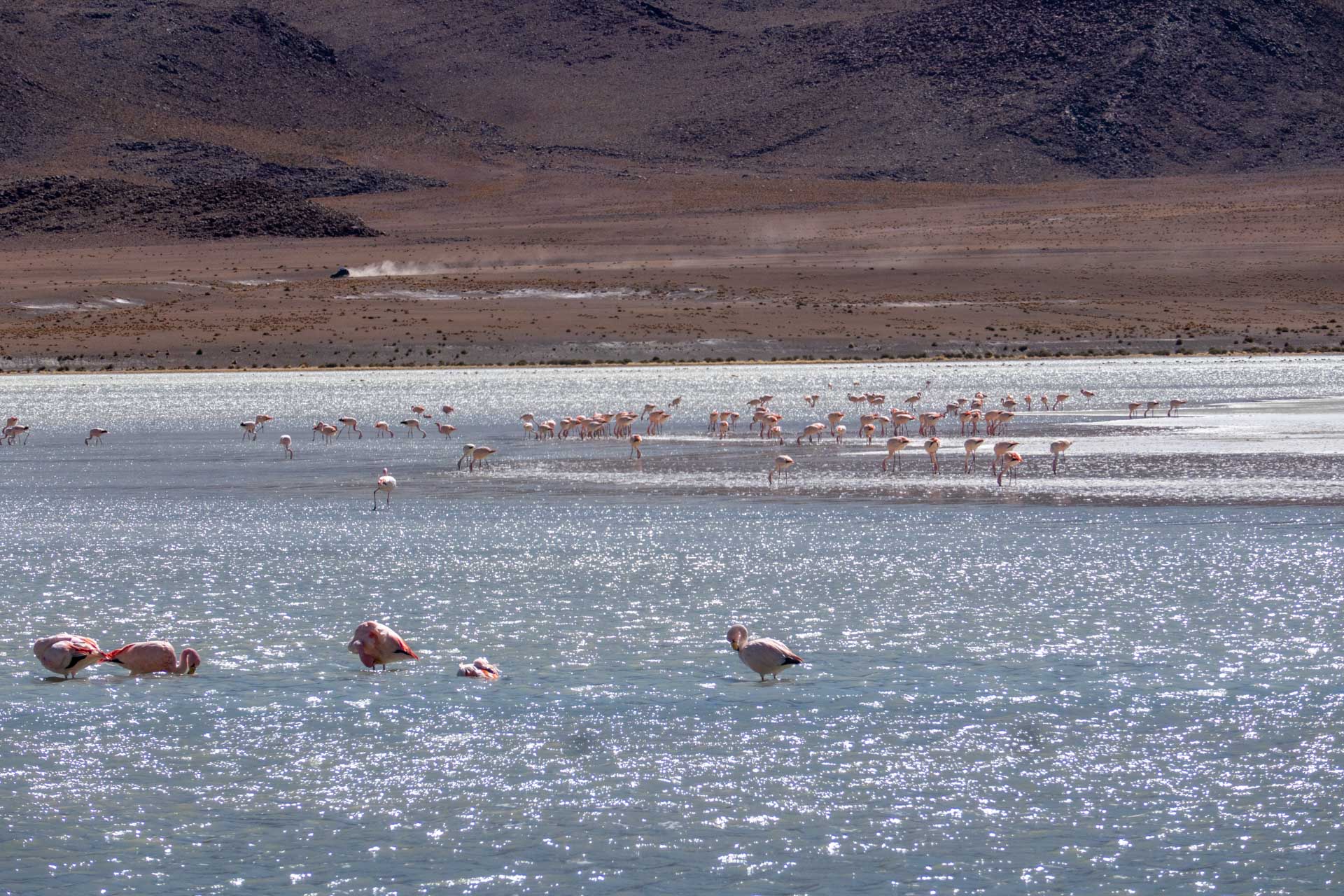
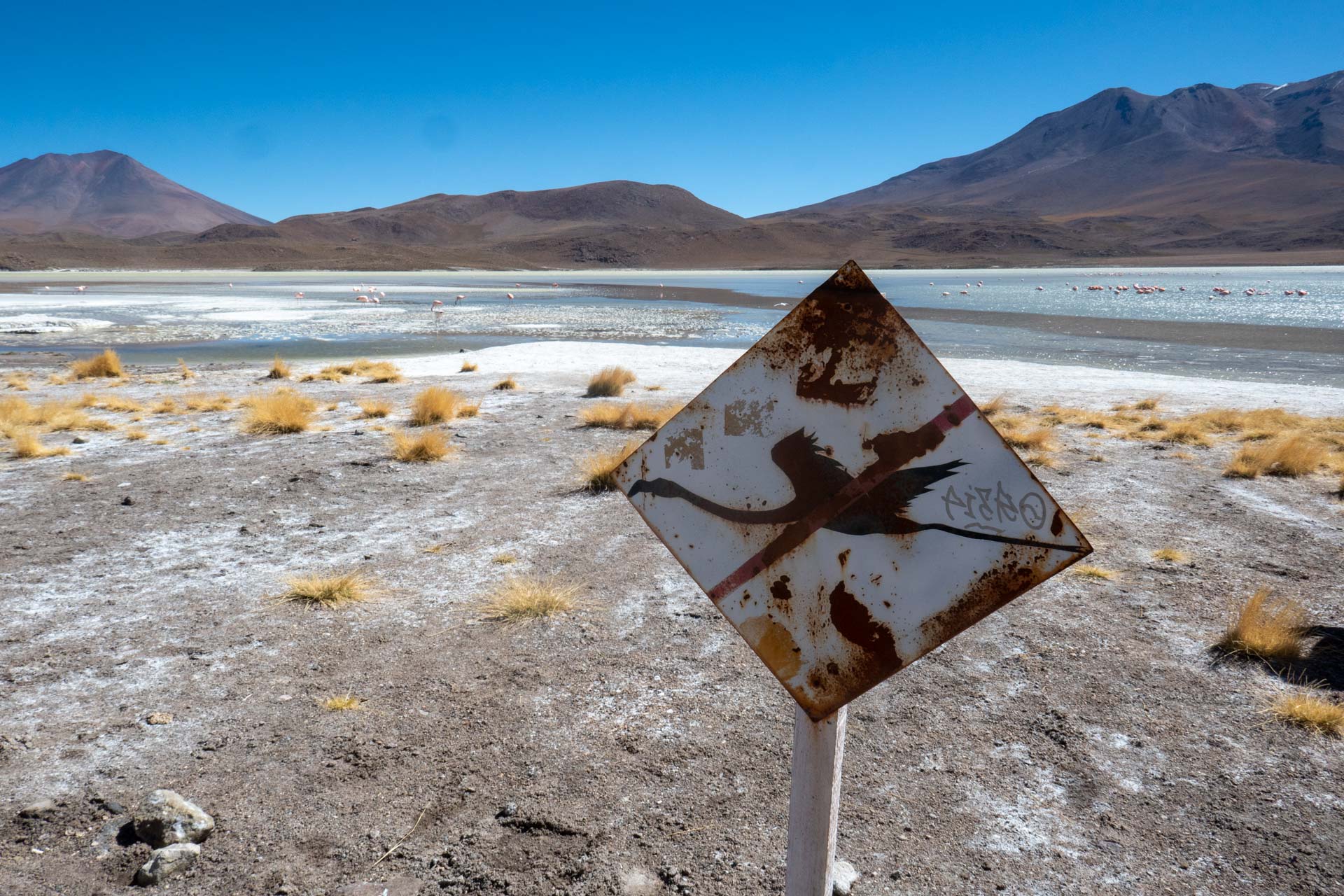
This sign is supposed to mean that you should not get so close to them that they take off and flee.
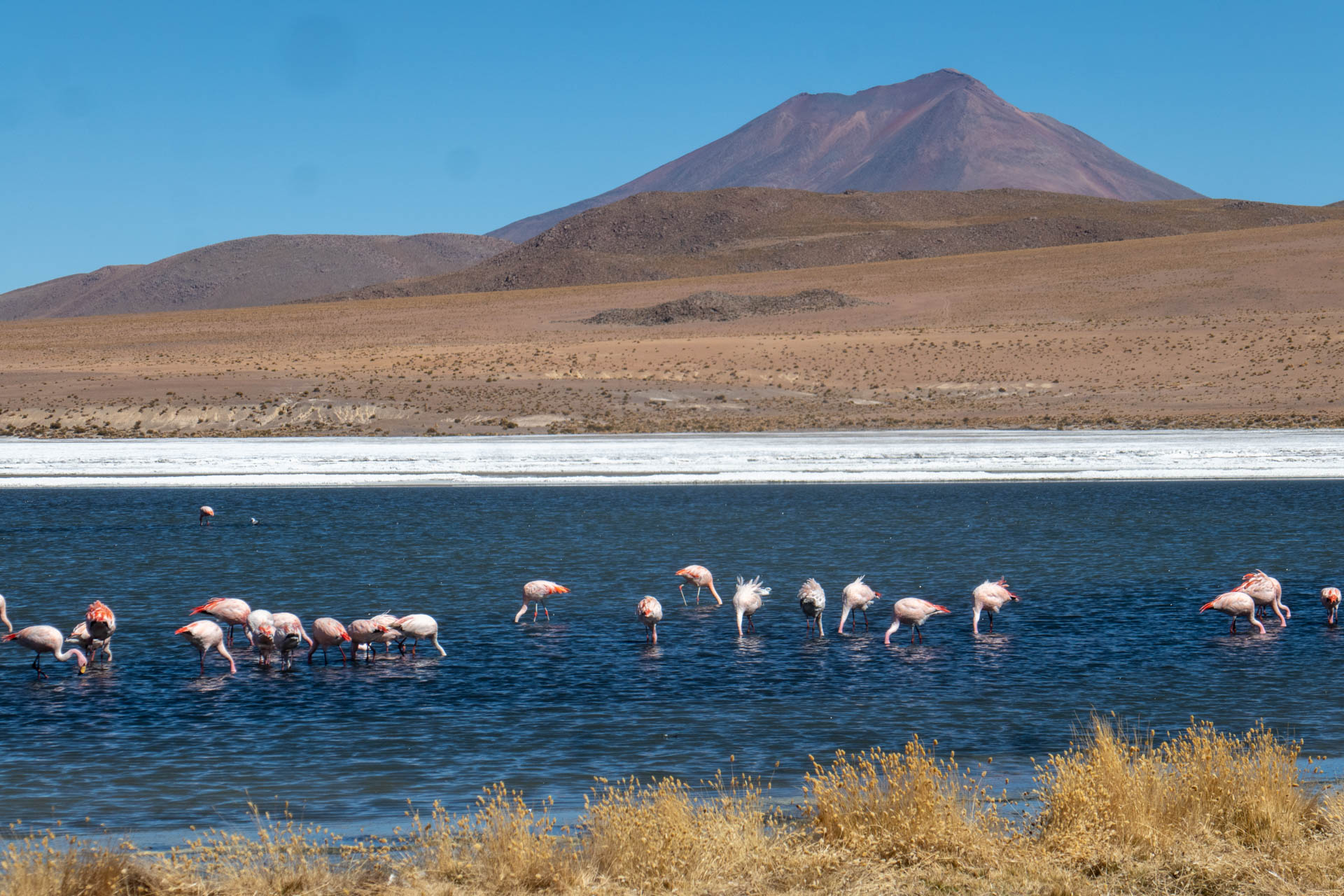
There were two kinds of flamingo there, the andean flamingo and the jame’s flamingo. There were also some seagulls.
The Landscape
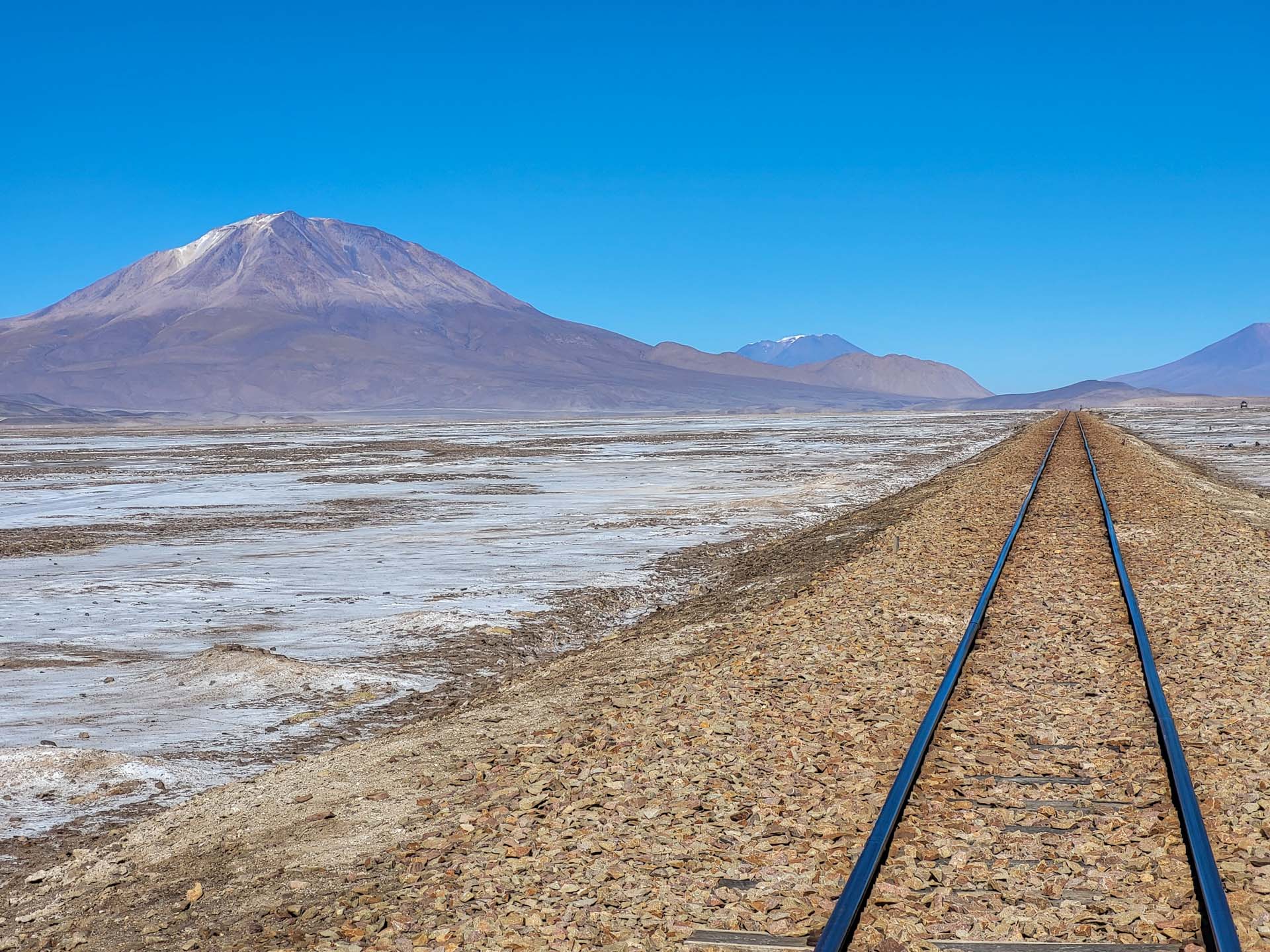
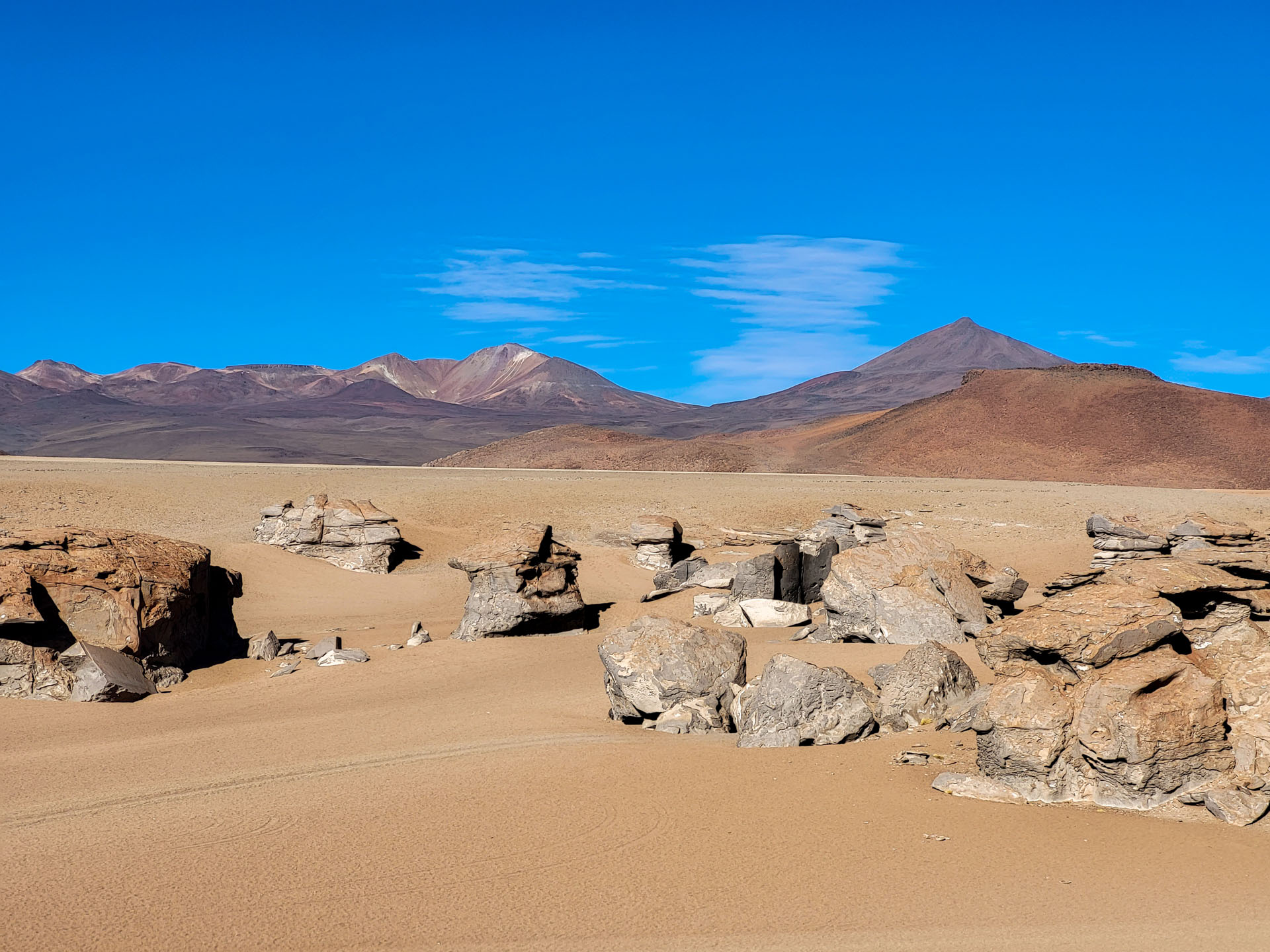
The rest of the landscape is very sandy and volcanic. Sand deserts and lava fields is the name of the game.
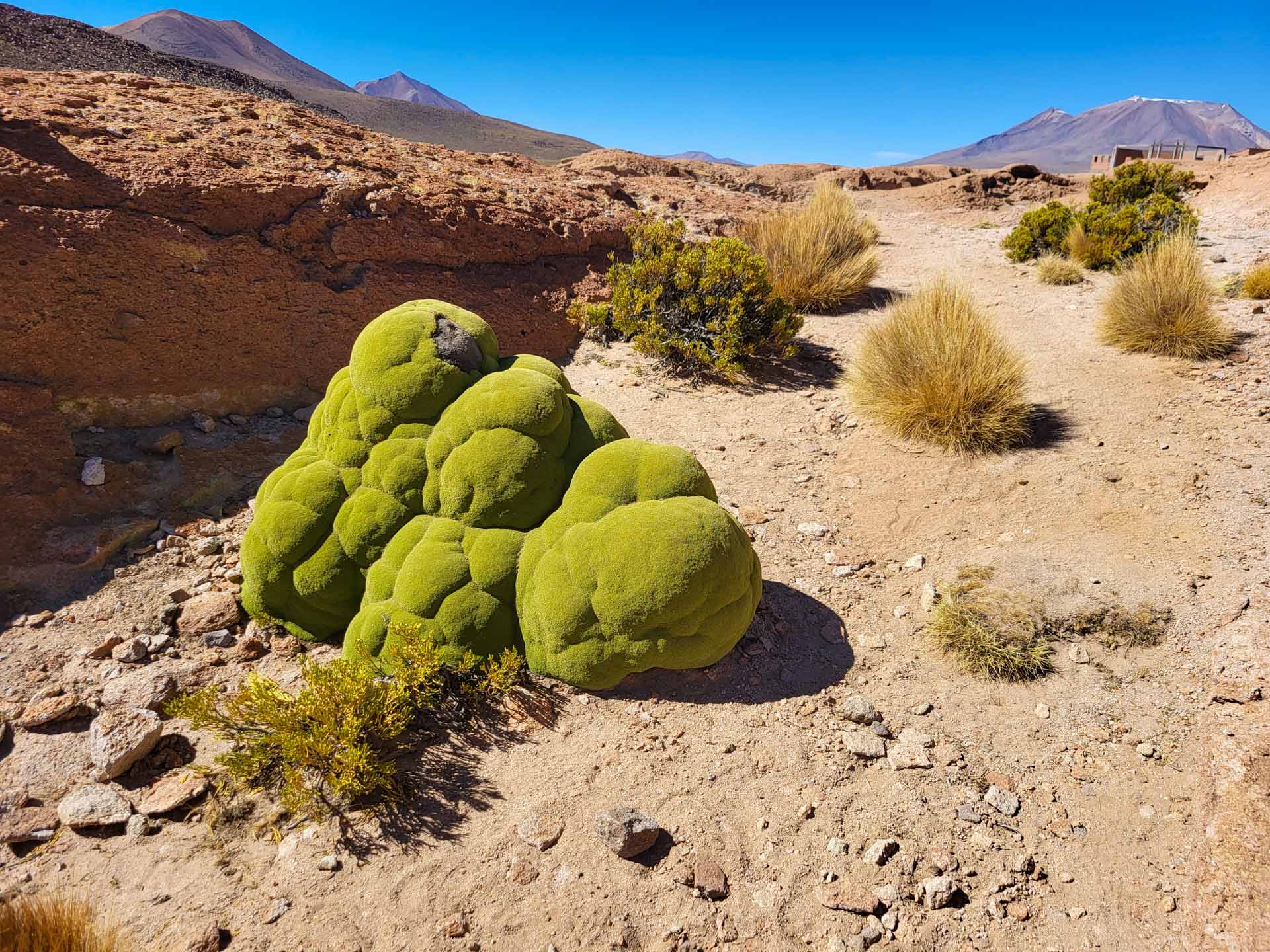
These plants are hundres of years old and grow very slowly. They can be used as medicinal plants and as water filters.
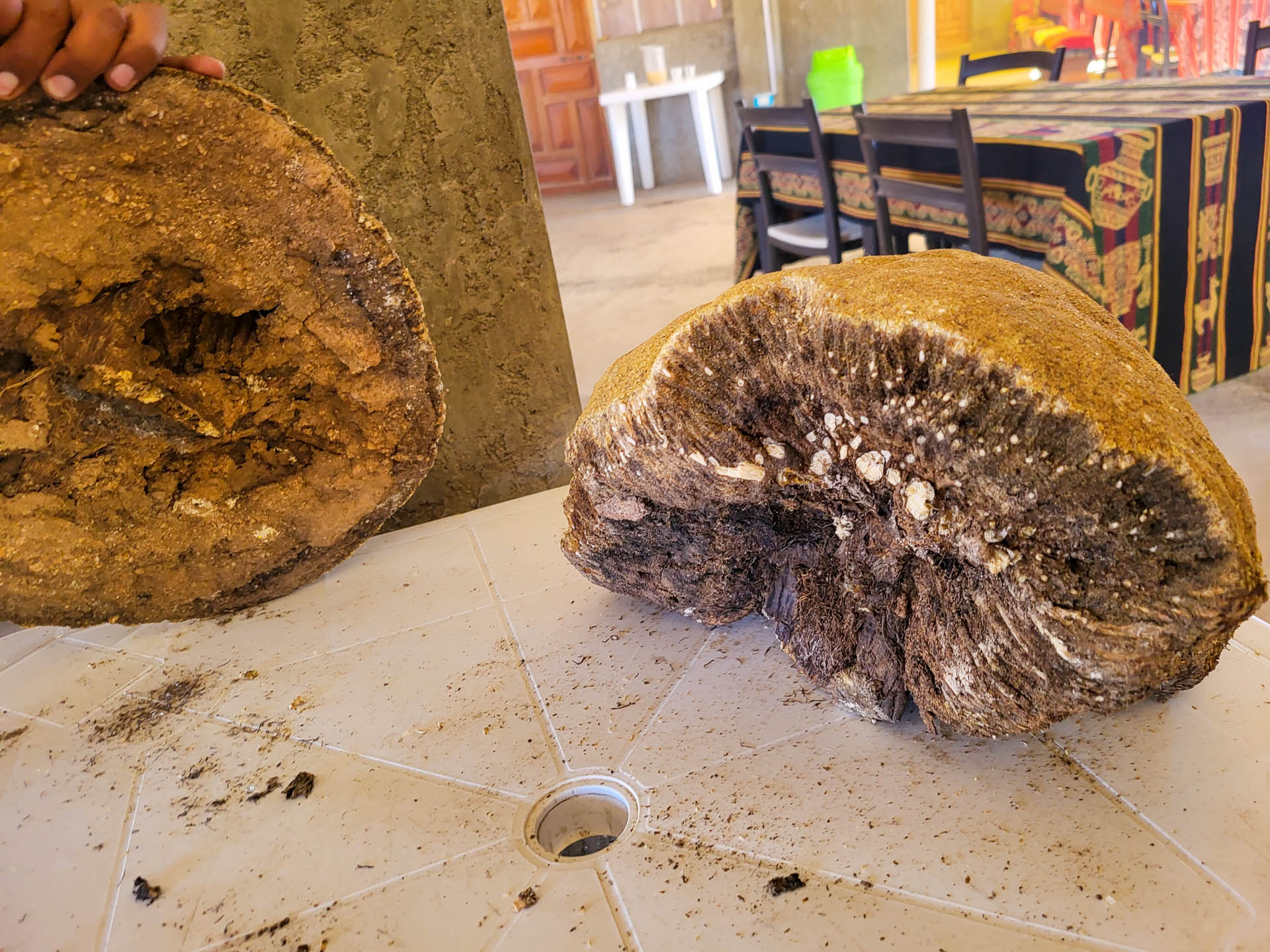
A look at this plant from the inside.
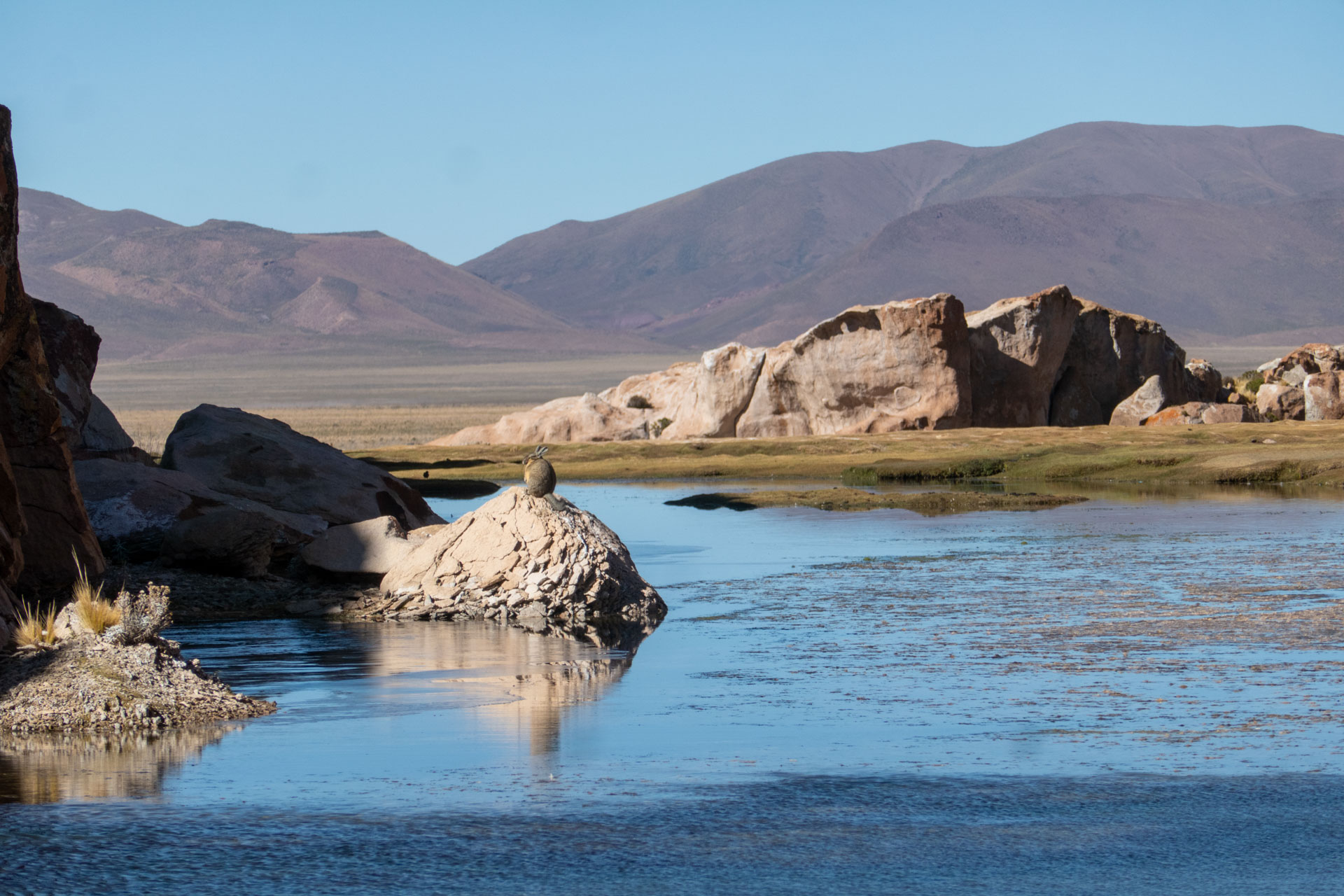
A vizcacha sunbathing on the rock.
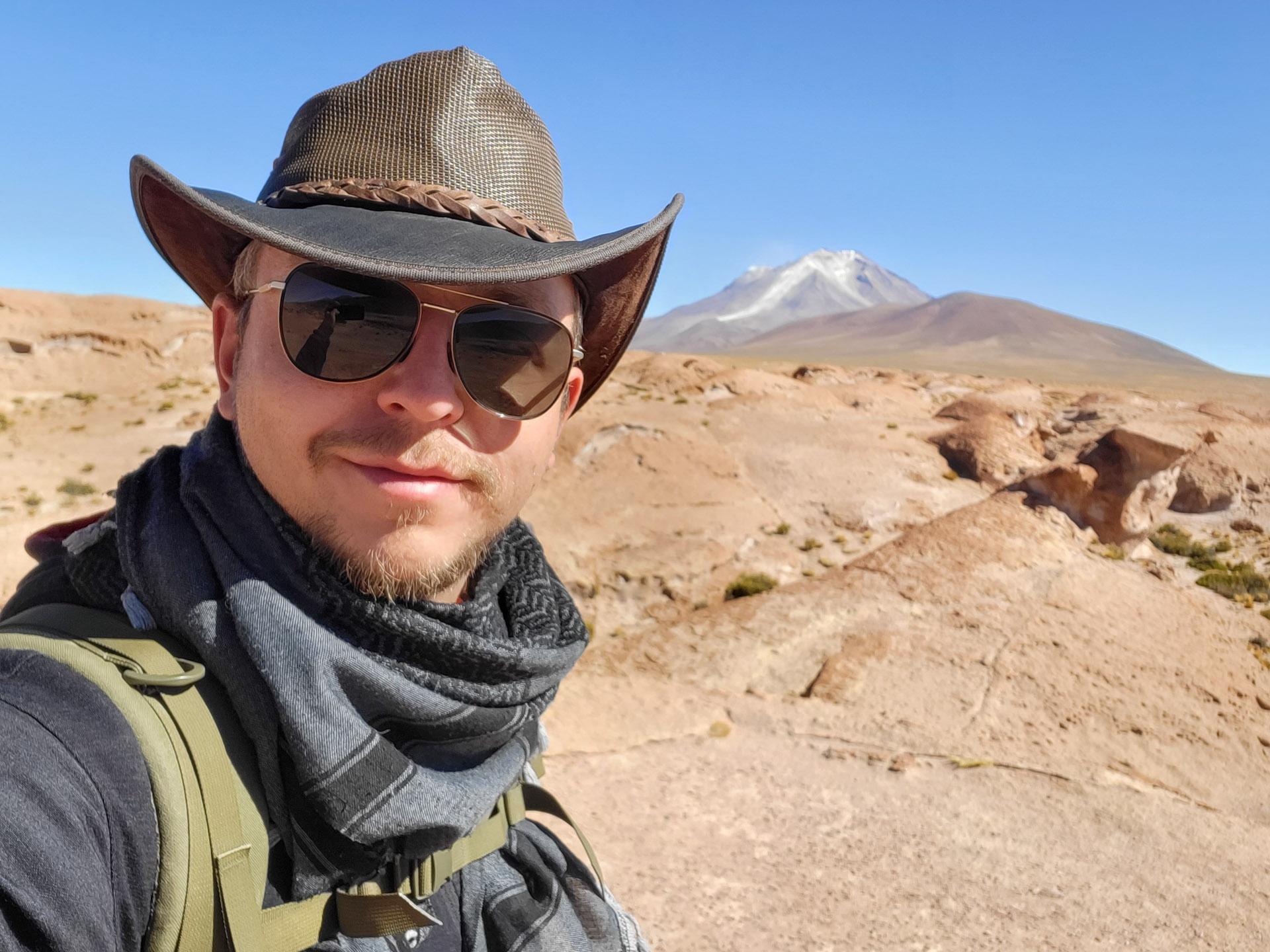
The volcano in the background is still active.
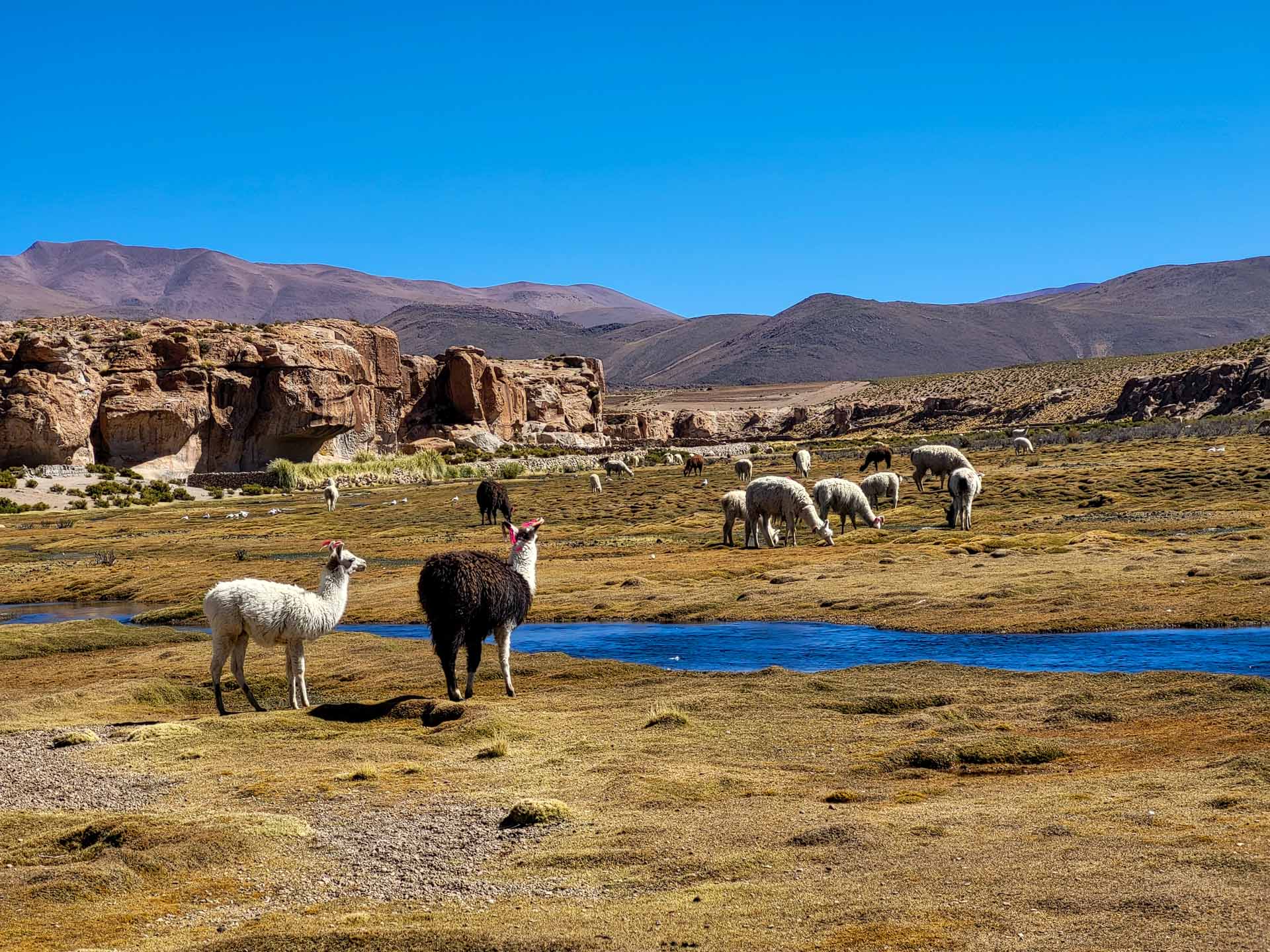
A herd of llamas grazing on the edge of an old lava field.
Thermals
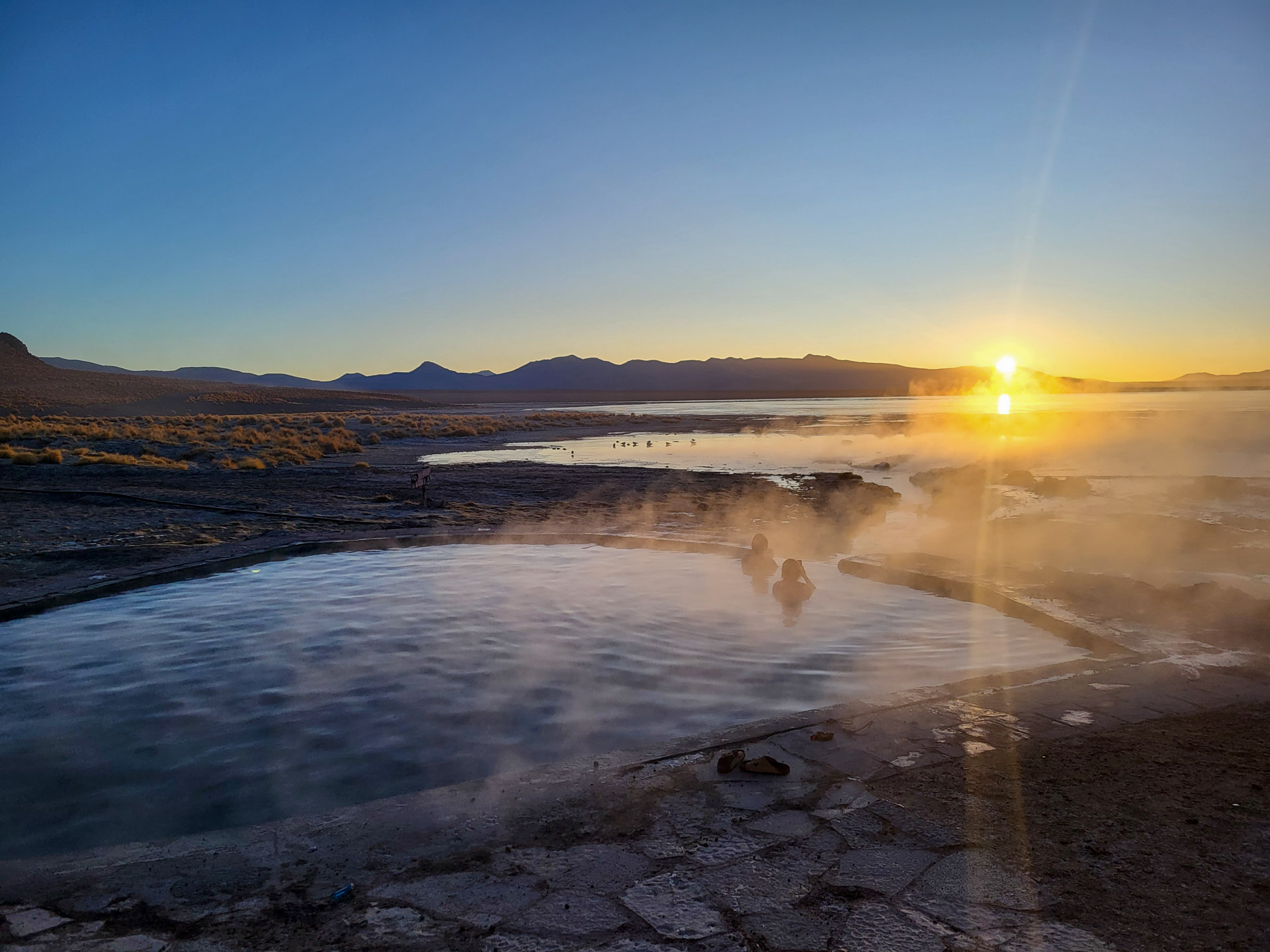
The Hot springs at sunrise. We had to get up at 3:30AM to get there in time for sunrise. The hot water was a godsend after the freezing temperatures during the night and morning.
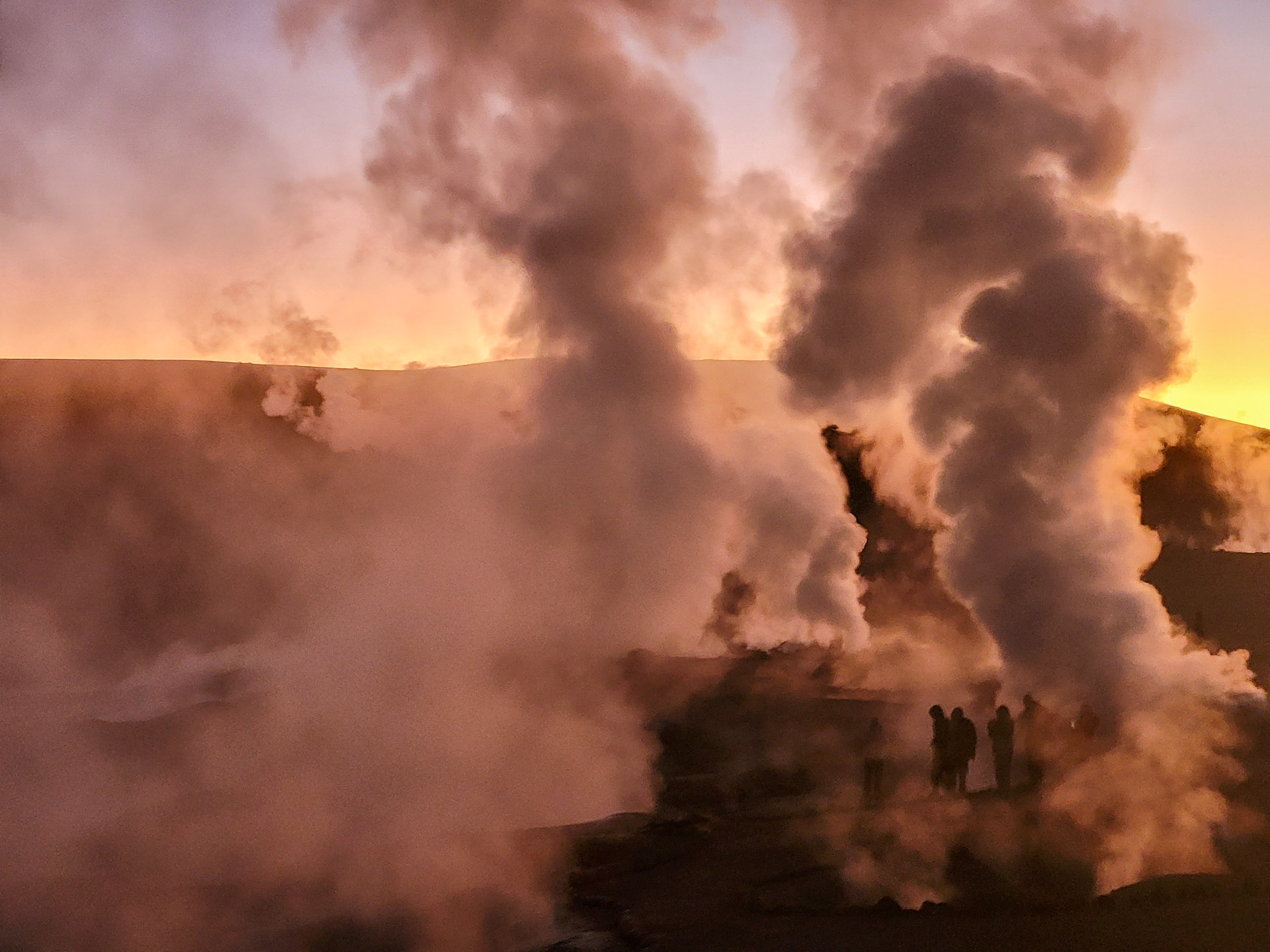
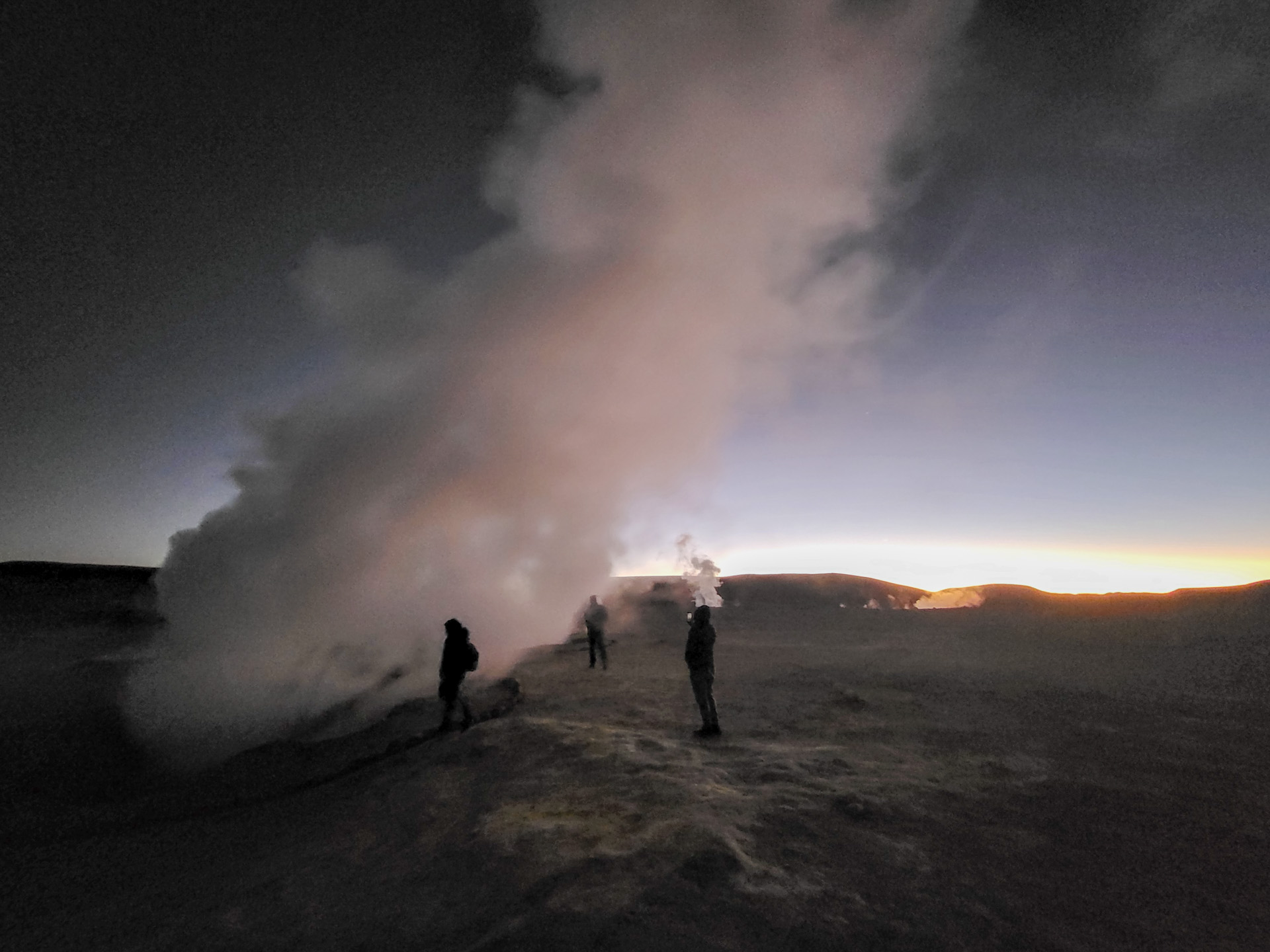
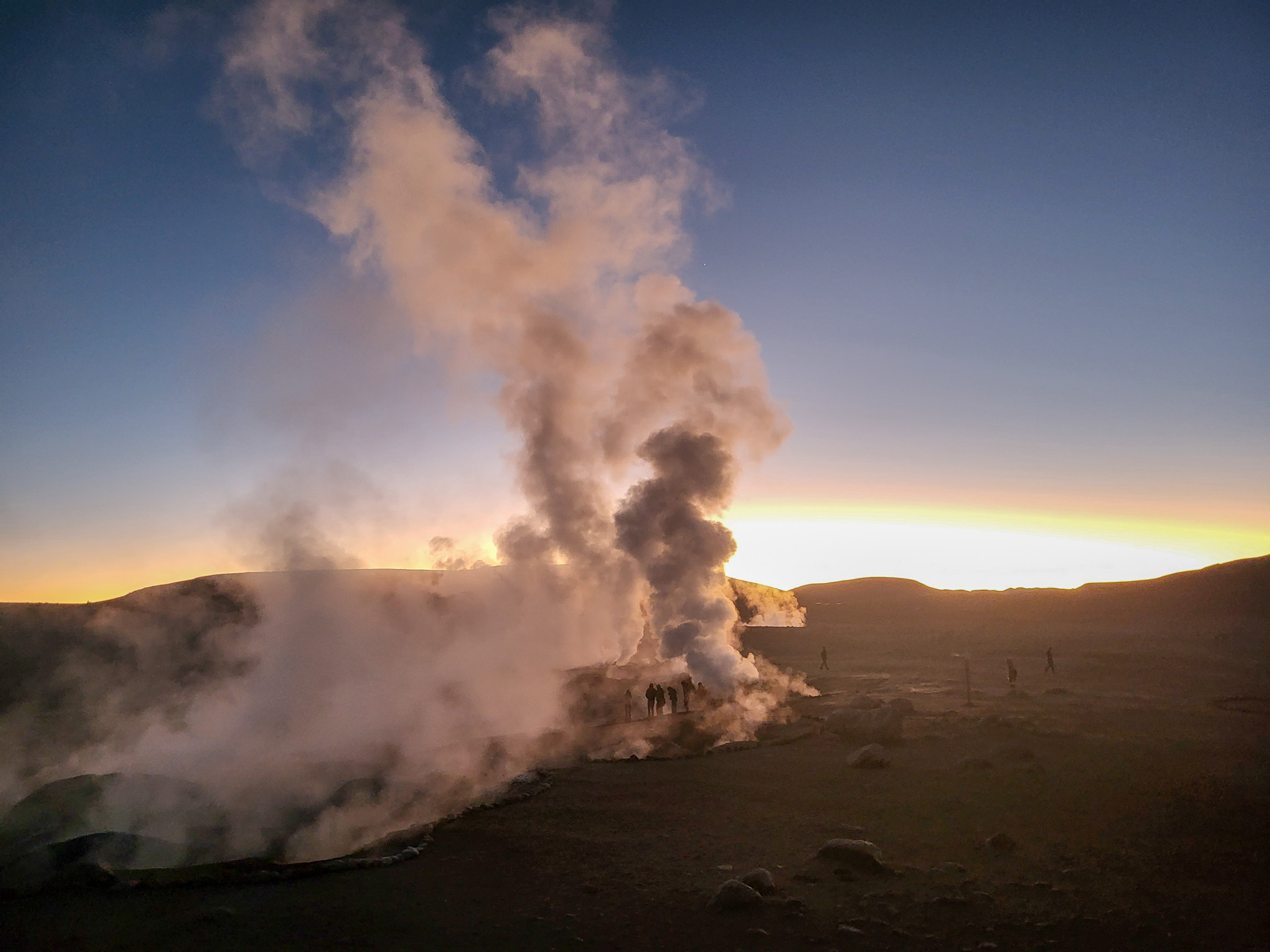
The geysirs. There is no erupting geysir like in Iceland or Yellowstone but they were still quite the sight in the morning light. I later learned from some other travelers that someone once fell into one of them and died of the burns hours later.
Back in Uyuni
Back in the town I glued my glasses back together with superglue. I also took Bismarck, our guide, to Sucre with me as that was my next destination and that is his hometown where he wanted to go anyways.